You stand at your back door, coffee in hand, surveying your outdoor living space. There’s the patio you added three years ago, the fire pit from last summer and that garden bed you planted in spring. Each project seemed like a good idea at the time, but now? They don’t quite work together. The flow feels off. Something’s missing.
If this sounds familiar, you’re not alone. Many homeowners invest thousands into their outdoor spaces without ever achieving the cohesive, functional result they envisioned.
This guide will walk you through everything you need to know about transforming your entire landscape into a true outdoor oasis.
What “Dream Landscape” Actually Means
Before diving into the how, let’s clarify what we mean by a “dream landscape.” It’s not about recreating the latest Pinterest trend or copying your neighbor’s setup. A true dream landscape is something much more personal and purposeful.
A dream landscape is:
- Designed around how you actually use your space, not fleeting trends. Your outdoor area should reflect your lifestyle, whether that means hosting large gatherings, creating a peaceful retreat or building a play paradise for active kids. The design serves your needs first.
- Characterized by intentional flow between areas. Each zone connects naturally to the next. Moving from your indoor kitchen to the outdoor dining area feels seamless. The pathway from the patio to the fire pit invites evening strolls. Nothing feels awkward or forced.
- Both functional and beautiful. A dream landscape performs as well as it looks. That gorgeous stone patio also provides ample entertaining space. The privacy screen doesn’t just block your neighbor’s view; it creates an intimate backdrop for your spa. Form and function work in harmony.
- Built with long-term maintenance in mind. Your dream landscape considers the reality of upkeep from day one. Smart plant choices, quality materials and thoughtful design details mean you spend time enjoying your space, not constantly maintaining it.
A dream landscape is NOT:
- Random patio additions. That standalone paver pad might have seemed practical at the time, but without considering how it connects to the rest of your yard, it becomes an island rather than an integrated feature.
- One-off projects spread over several years. Adding a deck one year, a fire pit the next and a garden bed the year after often results in mismatched styles, conflicting materials and a disjointed overall aesthetic. Each project was designed in isolation, without considering the bigger picture.
- Features that don’t work together. A stunning pool that blocks the view from your main patio. An outdoor kitchen positioned where smoke blows directly into your dining area. A play structure that dominates the sightlines from your relaxation space. When features compete rather than complement, the whole space suffers.
The difference between these scattered approaches and a true dream landscape transformation is holistic planning. When you design and build your entire landscape with a unified vision, every element supports every other element. The result isn’t just prettier, it’s fundamentally more functional, more valuable and more enjoyable for years to come.
Envisioning Your Dream Landscape
Creating the landscape you envision starts long before the first shovel breaks ground. It begins by understanding what you truly want from your outdoor space and how it will enhance your daily life. This visioning phase is where possibilities open up and your unique outdoor oasis starts to take shape.
Define Your Goals and Lifestyle Needs
Your outdoor space should be an extension of your home and your lifestyle. Before meeting with a designer or sketching ideas, spend time considering these essential questions:
How do you want to use your outdoor space?
Be specific here. “Relaxing outside” is a start, but dig deeper. Do you envision lazy Sunday mornings with coffee and a book? Yoga sessions at sunrise? Evening cocktails while dinner grills? The more clearly you can picture yourself using the space, the better your designer can bring that vision to life.
Who will use it?
Consider all the people who will spend time in your outdoor areas:
- Young children who need safe play spaces and room to run
- Teenagers who want hangout spots with friends
- Adults seeking sophisticated entertaining areas
- Extended family members who visit regularly
- Aging parents who may need accessible features
- Pets who need their own zones
What activities matter most?
Rank your priorities. Not every yard can accommodate everything, so knowing what’s non-negotiable helps focus the design. Common activities include:
- Outdoor cooking and alfresco dining
- Swimming and water recreation
- Gardening and growing food
- Lawn sports and active play
- Quiet reading or meditation
- Entertaining groups large and small
- Watching kids play while you relax nearby
What problems need solving?
Every property has challenges. Identifying yours upfront allows for smart design solutions:
- Privacy issues: Do neighbors overlook your yard? Is street noise intrusive?
- Drainage problems: Where does water pool after rain? Are there erosion concerns?
- Worn or dated spaces: Is your current landscape tired and uninviting?
- Lack of shade: Does harsh afternoon sun make your patio unusable in summer?
- Poor flow: Do you have to walk through the garden to reach the grill?
- Maintenance burdens: Are high-maintenance plantings eating up your weekends?
Gather Inspiration
Once you’ve clarified your needs, start collecting visual inspiration. This helps communicate your aesthetic preferences to your designer and ensures everyone’s working toward the same vision.
Create digital inspiration boards on Pinterest or save images to a dedicated folder on your phone. Don’t just pin outdoor spaces that look beautiful. Focus on specific elements that resonate with you. Maybe it’s the warm glow of landscape lighting, the natural feel of stacked stone or the inviting curve of a garden path.
Clip magazine pages or print photos of landscapes you admire. Sometimes the tactile experience of flipping through images sparks ideas you wouldn’t discover scrolling online.
Notice your neighbors’ yards during evening walks. What draws you in? What makes certain outdoor spaces feel welcoming? These local examples are especially valuable because they’re designed for your same climate and conditions.
Visit The Site Group’s featured projects gallery. Seeing completed projects from your area gives you realistic expectations and shows what’s possible within the Miami Valley’s specific conditions. You’ll see how other homeowners have solved similar challenges and created spaces that work beautifully year-round.
Pay attention to materials, colors and styles. Do you gravitate toward:
- Natural stone or modern pavers?
- Rustic, cottage-style gardens or clean, contemporary lines?
- Warm earth tones or cool grays and blues?
- Lush, layered plantings or minimalist landscapes?
There are no wrong answers, only your answers. The goal is to discover your personal aesthetic so your landscape feels authentically yours.
Consider Your Budget Reality
Let’s talk about the elephant in the backyard: cost. A complete landscape transformation is an investment, and being realistic about your budget from the start prevents disappointment and allows for smarter planning.
Set a realistic budget range. Research what similar projects cost in your area. Talk with neighbors who’ve completed landscape work. Understand that quality materials, professional design and skilled installation require meaningful investment, but they also deliver lasting value and enjoyment.
You don’t need everything figured out yet. Many homeowners delay starting because they’re not sure they can afford everything they want. Here’s the good news: That’s perfectly normal. A conversation with a professional designer helps clarify what’s achievable within your budget. They can suggest:
- Alternative materials that deliver similar aesthetics at lower costs.
- Phasing strategies that spread investment over time.
- Areas where splurging adds lasting value versus where savings make sense.
- Creative solutions that accomplish your goals differently than you imagined.
Professional designers maximize value within your budget. An experienced landscape designer helps you invest wisely. They know which corners you can cut without compromising quality and which elements deserve premium investment. They prevent costly mistakes that DIY or inexperienced contractors might make. And they have relationships with suppliers and subcontractors that often result in better pricing than you’d get on your own.
Think of the design fee not as an extra cost, but as insurance against expensive mistakes and a catalyst for getting the most from every dollar you invest in your outdoor space.
Think Long-Term
Your dream landscape isn’t just a place to enjoy today. It creates an outdoor environment that serves you well for decades to come.
How will your needs change in five to 10 years?
Life evolves, and smart landscape design anticipates these changes:
- Will young children age out of play structures?
- Might aging parents move in, requiring accessible pathways?
- Could you develop an interest in gardening or outdoor cooking?
- Will you transition from active entertaining to quieter enjoyment?
- Are you planning to age in place, needing lower-maintenance solutions?
Designing with flexibility allows your landscape to evolve with you. A sport court that becomes a meditation garden. A play lawn that transforms into an expanded entertaining area. Features that adapt rather than becoming obsolete.
Phasing options if needed. Not every element needs completion in year one. Strategic phasing allows you to:
- Start with foundational elements (grading, drainage, main hardscapes).
- Add amenity features (pools, outdoor kitchens) in subsequent phases.
- Enhance plantings and refinements as budget allows.
- Spread investment while maintaining design cohesion.
A professional designer creates a master plan that guides phased implementation, ensuring each phase stands alone while supporting the complete vision.
Design for durability and timelessness. Trends come and go, but quality and classic design endure. Choose:
- Materials built for longevity: Natural stone, quality hardwoods, durable composites.
- Timeless styles: Clean lines and classic proportions over trendy details.
- Proven plants: Adapted species with track records in your climate.
- Flexible spaces: Areas that can serve multiple purposes as needs change.
The best landscapes look as fresh in decade two as they did on installation day because they were built right from the start.
Design Functional Zones That Work Together
One of the defining characteristics of a true dream landscape is how effortlessly it works as a whole. Instead of feeling like a collection of disconnected features, the space functions as a series of intentional outdoor “rooms,” each designed for a specific purpose but visually and physically connected to the others.
This concept, often called landscape zoning, is the backbone of successful outdoor living design. Just like inside your home, different areas serve different roles: cooking, relaxing, playing, entertaining or retreating. The key is designing these zones so they flow together naturally while still maintaining their own identity.
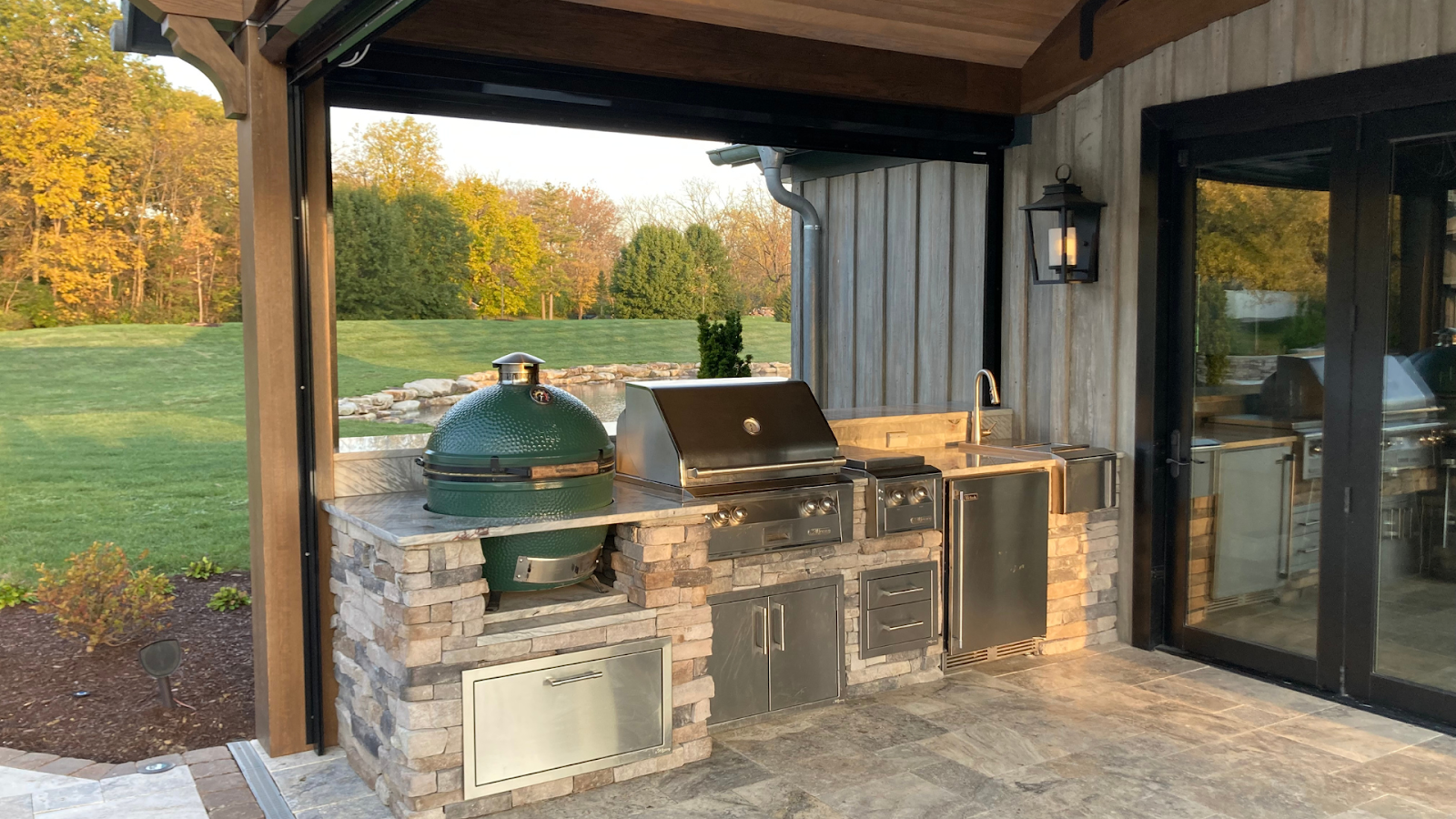
The Outdoor Kitchen and Dining Zone
For many homeowners, the outdoor kitchen becomes the centerpiece of their outdoor living space. When designed correctly, it functions as a natural gathering point without disrupting flow, comfort or usability.
The goal: Create an outdoor kitchen that feels like a true extension of the home, not an afterthought.
Key Elements of an Outdoor Kitchen and Dining Zone:
A well-designed outdoor kitchen typically includes:
- Grill islands or built-in cooking equipment designed for frequent use.
- Adequate counter space for food prep, serving and casual seating.
- Storage solutions for utensils, cookware and accessories.
- Dedicated dining areas, either covered or uncovered.
- Proximity to the indoor kitchen for convenience and efficiency.
- Layered lighting for safe and inviting evening use.
Design Considerations of an Outdoor Kitchen and Dining Zone:
These behind-the-scenes decisions make or break the space:
- Prevailing wind direction to prevent smoke from blowing into seating or dining areas
- Utility access (gas, electric, water) planned early to avoid costly retrofits
- Traffic flow from the house to cooking and dining areas
- Seating capacity based on how you typically entertain — not just maximum space
Thoughtful planning ensures guests aren’t crowding the grill, crossing through prep zones or blocking pathways.
The Pool and Spa Oasis Zone
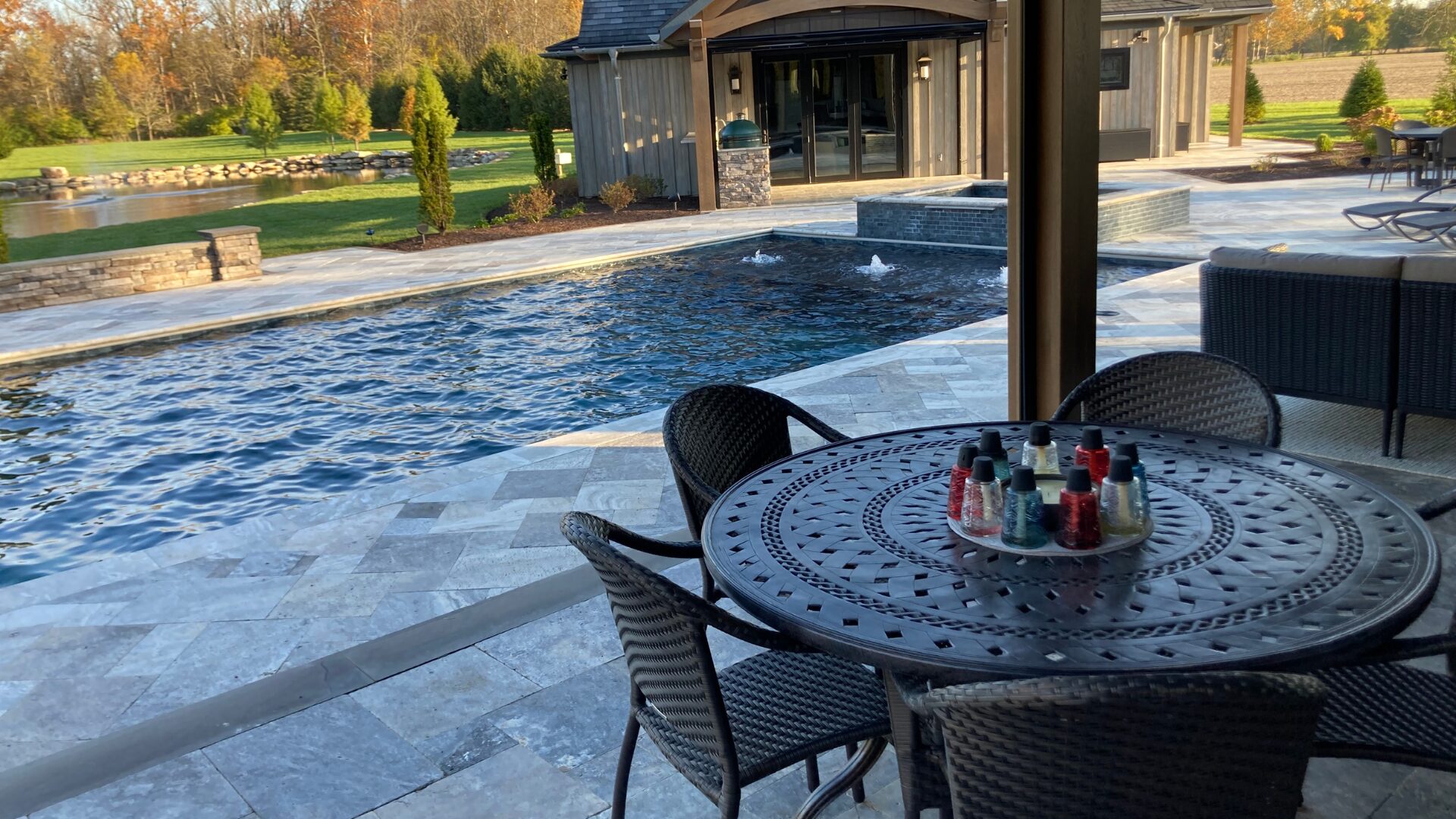
A pool or spa can transform a backyard into a true backyard oasis, but only when it’s thoughtfully integrated into the overall dream landscape design. Without proper planning, pools can overwhelm a yard, disrupt flow or feel disconnected from surrounding spaces.
The goal: Create a relaxing, resort-like environment that feels intentional, balanced and easy to enjoy.
Key Elements of a Pool and Spa Oasis Zone:
A well-designed pool and spa zone often includes:
- Pool design and placement tailored to the size and shape of the property.
- Spa or hot tub integration for year-round enjoyment.
- Pool decking materials that balance safety, comfort and aesthetics.
- Lounging areas for sunbathing and relaxation.
- Shade structures such as umbrellas, pergolas or cabanas.
- Privacy screening using plantings or architectural elements.
- Water features that add movement, sound and visual interest.
Design Considerations of a Pool and Spa Oasis Zone:
These details ensure the space is both beautiful and functional:
- Sun exposure throughout the day to balance warmth, shade and usability
- Sight lines from the house for visual connection and supervision
- Safety considerations, especially for families with young children
- Maintenance access for cleaning and service needs
- Equipment placement and screening to keep mechanical elements out of view
When these factors are addressed early in the landscape design process, the pool becomes a seamless part of the outdoor living experience rather than a dominating feature.
The Kids’ Play and Activity Zone
An effective kids’ play and activity zone creates space for movement, imagination and energy, without taking over the entire yard. When thoughtfully designed, these areas support active play while still blending seamlessly into the broader outdoor living environment.
The goal: Give children room to play freely while maintaining balance, safety and long-term flexibility within the landscape.
Key Elements of a Kids’ Play and Activity Zone:
Well-designed play and activity areas often include:
- Sport courts for basketball, pickleball or multi-use games.
- Open lawn areas for running, games and informal play.
- Age-appropriate play structures that fit the family’s current needs.
- Safety surfacing in high-use or fall-prone areas.
- Clear visibility from main entertaining areas for easy supervision.
Design Considerations of a Kids’ Play and Activity Zone:
Planning for both today and tomorrow makes these spaces more successful:
- Designing for growth, so areas can evolve as children get older
- Durable, low-maintenance plantings that withstand heavy use near play zones
- Soft transitions to adult spaces using plantings or subtle grade changes
- Adequate lighting to support safe evening play and visibility
When integrated into the overall dream landscape design, kids’ activity areas feel intentional, not intrusive, and remain functional long after play structures are no longer needed.
The Fire Feature and Gathering Area
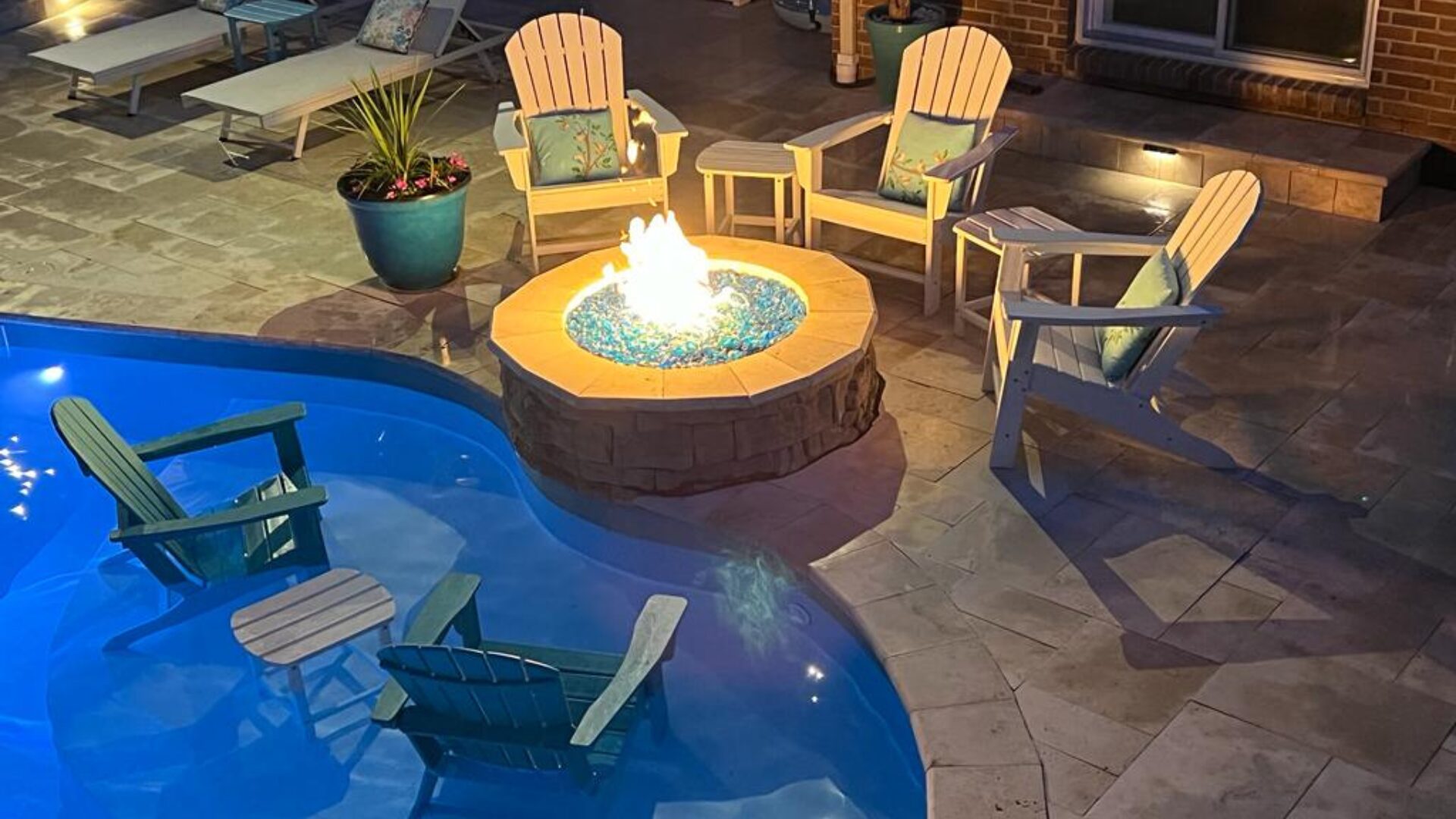
A fire feature naturally draws people together, creating a focal point that extends the usability of your outdoor space well beyond warm-weather months.
The goal: Create a comfortable gathering space that enhances ambiance while fitting seamlessly into the surrounding outdoor living areas.
Key Elements of a Fire Feature and Gathering Area
A well-designed fire-focused space often includes:
- Fire pits or outdoor fireplaces, selected based on how the space will be used.
- Thoughtful seating arrangements, whether built-in, movable or a combination of both.
- Overhead coverage options such as pergolas or pavilions for added comfort.
- Proximity to other zones like patios, outdoor kitchens or lounges to encourage natural flow.
Design Considerations of a Fire Feature and Gathering Area
These factors ensure the space is safe, functional and enjoyable year-round:
- Fire safety clearances to protect nearby structures, plantings and guests
- Fuel type selection (wood-burning versus gas) based on convenience and maintenance preferences
- Wind patterns to manage smoke and heat direction
- Year-round usability, including seating comfort and protection from the elements
- Ambiance and view considerations, ensuring the fire feature enhances (not blocks) sightlines
When integrated into the overall landscape design, a fire feature becomes more than an accessory. It serves as a welcoming anchor that connects multiple zones and encourages people to linger longer outdoors.
Common Mistakes to Avoid When Planning Your Dream Landscape
Even with the best intentions, many homeowners make decisions that prevent their landscape from ever feeling complete or cohesive. Learning from these common mistakes can save time, money and frustration.
Common Landscape Design Mistakes
These issues often stem from focusing on individual features instead of the landscape as a whole.
- Not planning for growth: Plants mature, families change and needs evolve. Designing only for the present can lead to overcrowded plantings, obsolete play areas or spaces that no longer function a few years down the road.
- Ignoring drainage and grading: Poor drainage can undermine patios, damage plantings and create ongoing maintenance problems. Addressing grading early is essential for both longevity and usability.
- Poor material choices for the local climate: Materials that look great elsewhere may not perform well in your region. Freeze-thaw cycles, moisture and sun exposure all impact durability.
- Forgetting about utilities and access: Gas lines, electrical needs, irrigation and service access must be planned from the start. Overlooking these details often results in costly changes later.
- Scale issues: Features that are too small feel underwhelming, while oversized elements can dominate the yard. Proper scale ensures balance and visual harmony across the entire landscape.
Common Process Mistakes When Planning Your Dream Landscape
These missteps often lead to stress, delays and disappointing outcomes:
- Rushing into decisions: Big landscape choices benefit from thoughtful planning. Quick decisions often overlook long-term functionality and integration.
- Not vetting contractors properly: Experience, process and communication matter just as much as price. The wrong partner can derail even a great vision.
- Lack of clear communication: Unclear expectations around scope, budget and timeline create confusion and frustration on both sides.
- Unrealistic timelines or budgets: Quality landscape design and installation take time. Setting realistic expectations helps avoid compromises that affect the final result.
- Skipping the design phase: This is one of the most costly mistakes. Without a cohesive design plan, projects tend to feel disjointed and require rework later.
Long-Term Mistakes When Planning Your Dream Landscape
A dream landscape should improve with time, not become a burden.
- Neglecting maintenance: Even the best-designed landscapes require care. Failing to plan for upkeep leads to decline and unnecessary repairs.
- Not protecting your investment: Regular maintenance, proper drainage and timely repairs preserve both beauty and property value.
- Ignoring small problems until they grow: Minor issues, like drainage concerns or plant stress, are easier and less expensive to fix early. Left unaddressed, they can compromise the entire landscape.
Ready to Create Your Dream Landscape?
A true dream landscape doesn’t happen by accident. It’s the result of thoughtful planning, intentional design and a process that considers how every part of your outdoor space works together. When your landscape is designed as a complete system, you end up with a space that’s easier to enjoy, easier to care for and built to last.
If you’re ready to stop guessing and start planning with clarity, the smartest first step is a conversation. A professional design process helps turn ideas into a cohesive plan before costly mistakes happen.
Schedule a consultation, explore the design process, or download the outdoor planning guide to take the next step toward your dream landscape.