The term “modern backyard design” gets thrown around a lot. But what does it actually mean for your outdoor living area?
Most people assume it’s about a specific look, like clean lines, certain materials or minimalist furniture. And sure, that’s part of it. But modern design really involves how outdoor spaces function, not just how they look.
The backyards that feel truly modern are the ones that work seamlessly with how you live. They connect naturally to your house. They’re organized around purpose, not just decorated. They solve problems like privacy and usability without making compromises.
Here are four design ideas that make great modern backyards.
1. Seamless Indoor-Outdoor Integration
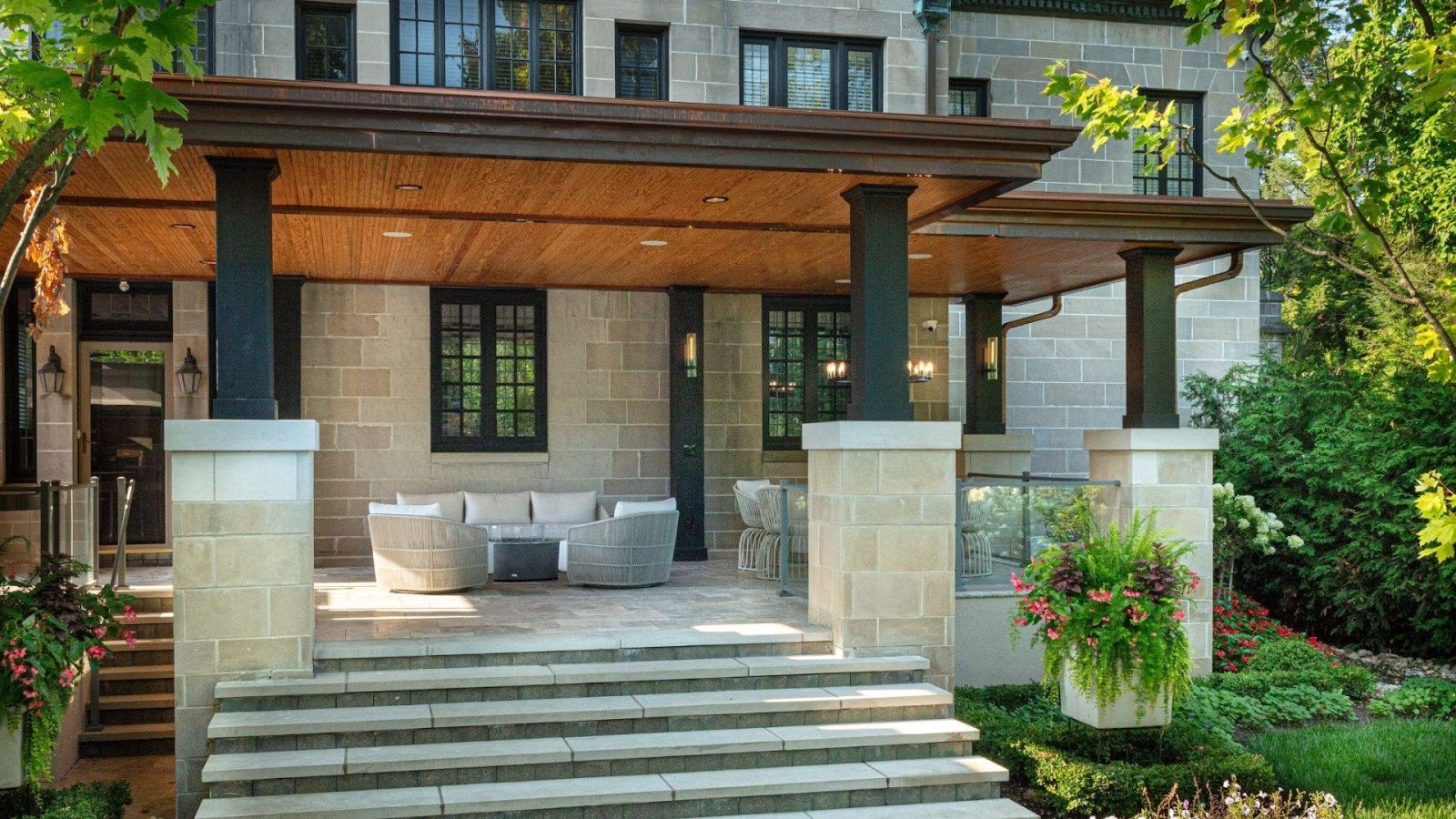
Here’s what makes a backyard feel modern more than anything else: when you can’t tell where your house ends and your outdoor space begins.
Not in a literal sense. You’re not removing walls or living without a roof. But the transition should feel so natural that stepping outside is like walking from your kitchen into your living room. No jarring shift in style, no awkward threshold, no feeling like you’ve entered a completely different world.
This is indoor-outdoor integration, and it’s the foundation of modern backyard design.
Blending Indoor and Out
Most backyards feel tacked on. You walk out the door and suddenly everything changes. There are different materials, a different style and a different vibe. Your house is one thing, your yard is something else entirely.
Modern design erases that line.
When done right, your outdoor space becomes a genuine extension of your home. Not a separate area you visit occasionally, but part of your daily living space that you move through naturally.
And here’s the practical benefit: Spaces that flow seamlessly get used more. When there’s no friction (physical or visual) between inside and out, you’re outside more often, for longer periods, doing more than just grilling on weekends.
Mistakes That Break the Flow
Creating visual barriers. Tall planters, fencing or structures placed right outside your door make the yard feel separate and closed off. Pull those elements back to create openness near the transition zone.
Treating the back door like an afterthought. Many homes have beautiful front entries and neglect the back door area. If that’s your primary outdoor access point, it deserves the same attention, including proper lighting, attractive materials and intentional design.
Ignoring material and style continuity. Your house already has a material palette, both inside and out, and your outdoor space should relate to it. This doesn’t mean everything matches exactly, but there should be a visual thread connecting them.
2. Multi-Functional Outdoor Rooms
Think about how your house is organized. You don’t have one big empty room where you cook, eat, watch TV and sleep. You have a kitchen for cooking, a dining room for meals, a living room for relaxing, bedrooms for sleeping.
Each space has a purpose. Each one works differently.
Modern backyards should function the same way.
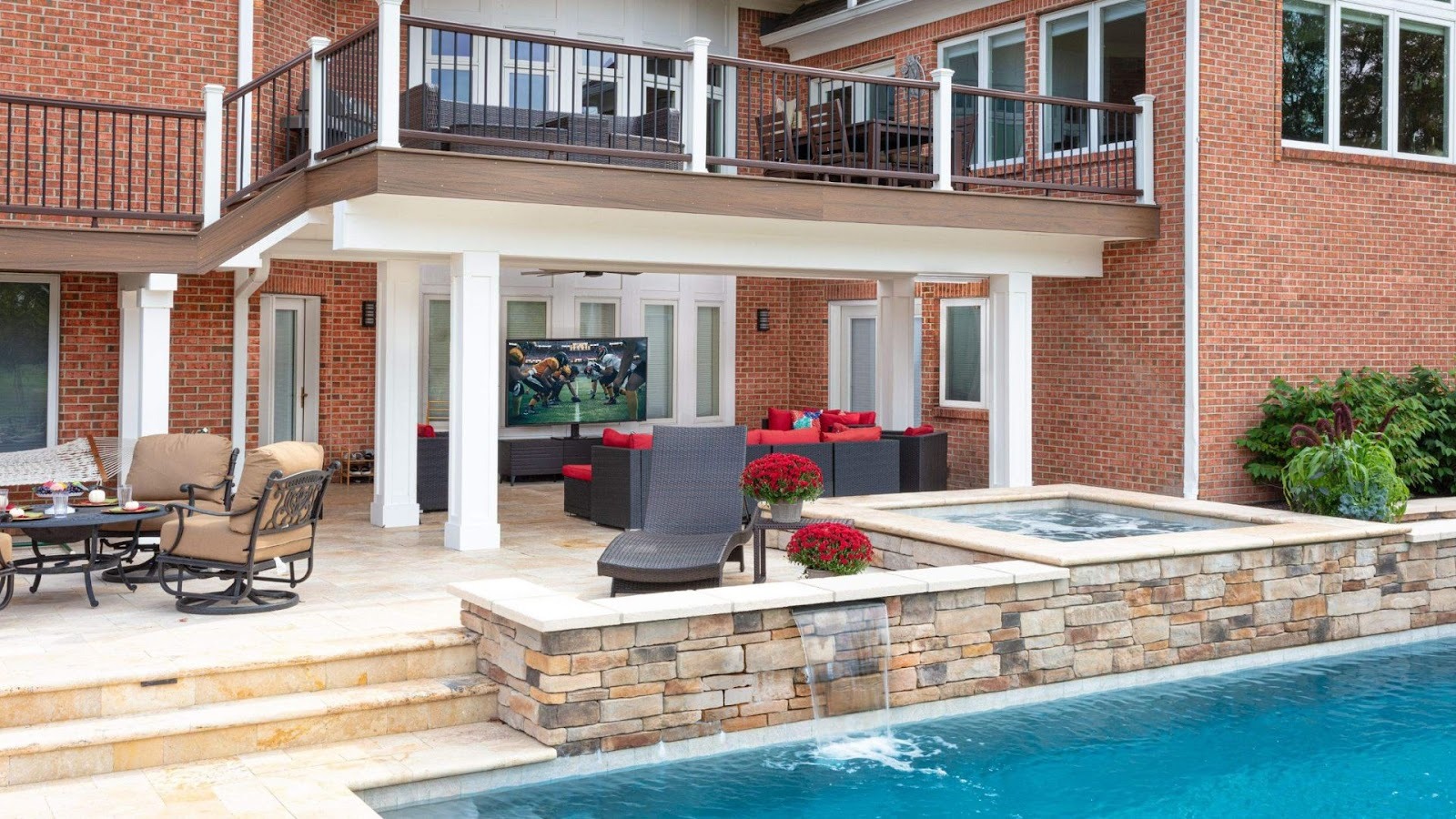
Instead of one undifferentiated patio with a grill and some random furniture, multi-functional outdoor rooms create defined zones, each with its own purpose, its own character and its own reason for being there. And when things have a specific purpose, they get used more.
Don’t Let It Go Unused
An undefined outdoor space doesn’t get used efficiently. You end up with a grill next to the dining table next to a random lounge chair, and none of it works particularly well because nothing has a clear job.
Multi-functional rooms solve this by creating intentional zones that support specific activities:
A cooking zone with counter space, storage and proper ventilation; not just a grill shoved in a corner.
A dining zone with a real table, comfortable seating and lighting that makes evening meals possible.
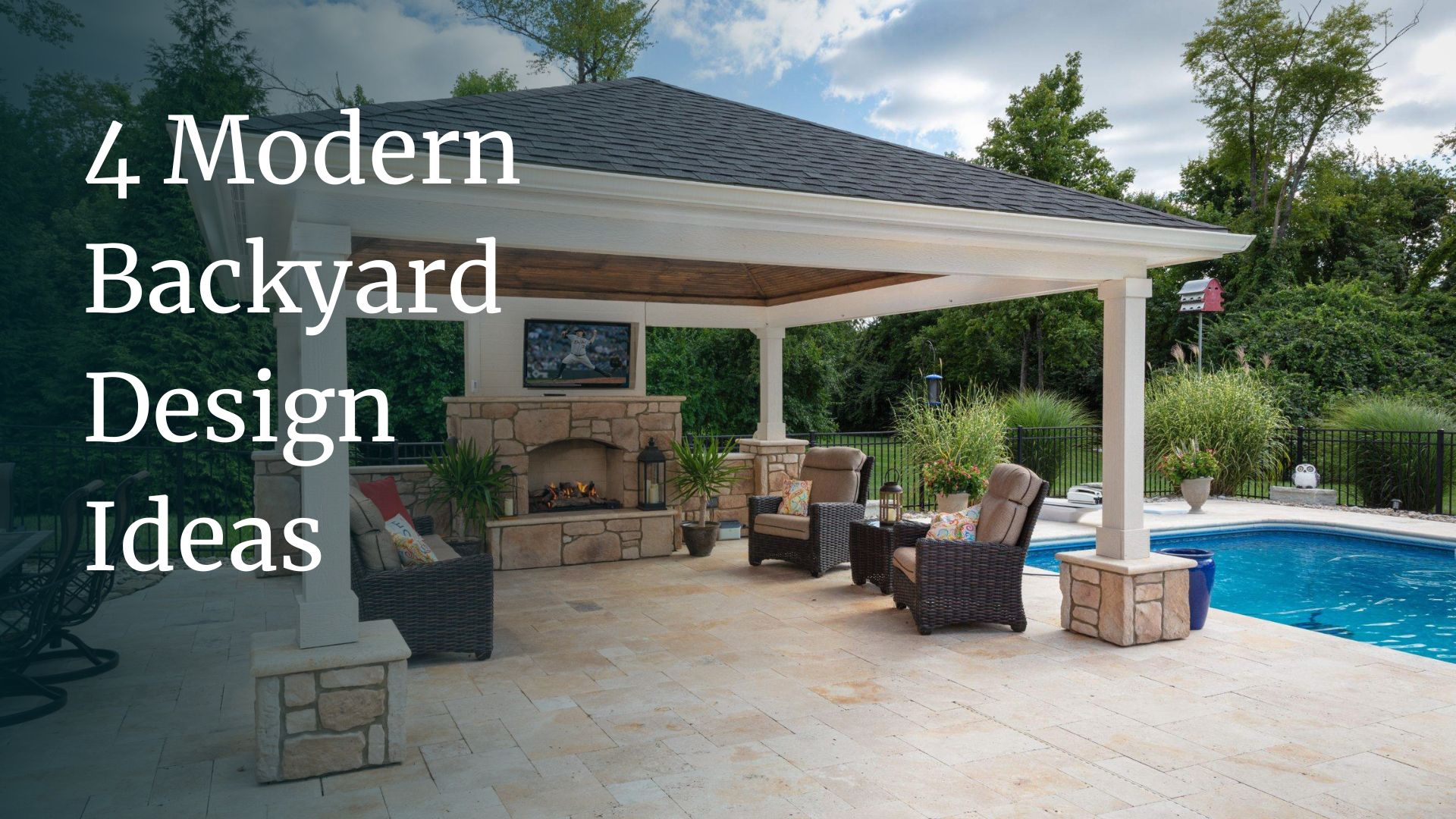
A lounge zone with weather-resistant furniture arranged for conversation, a fire feature as an anchor and enough comfort that you’d actually choose to sit there.
Activity zones for whatever your life requires: pool area, hot tub, play space for kids, putting green, outdoor office setup.
When each area has a defined purpose, you use your outdoor space the way you use your house, moving naturally between zones depending on what you’re doing.
These rooms don’t need walls. They’re defined by furniture arrangement, material changes, level shifts, overhead structures or plantings. You create the sense of separate spaces without actually building separate spaces.
3. Fire Features as Gathering Anchors
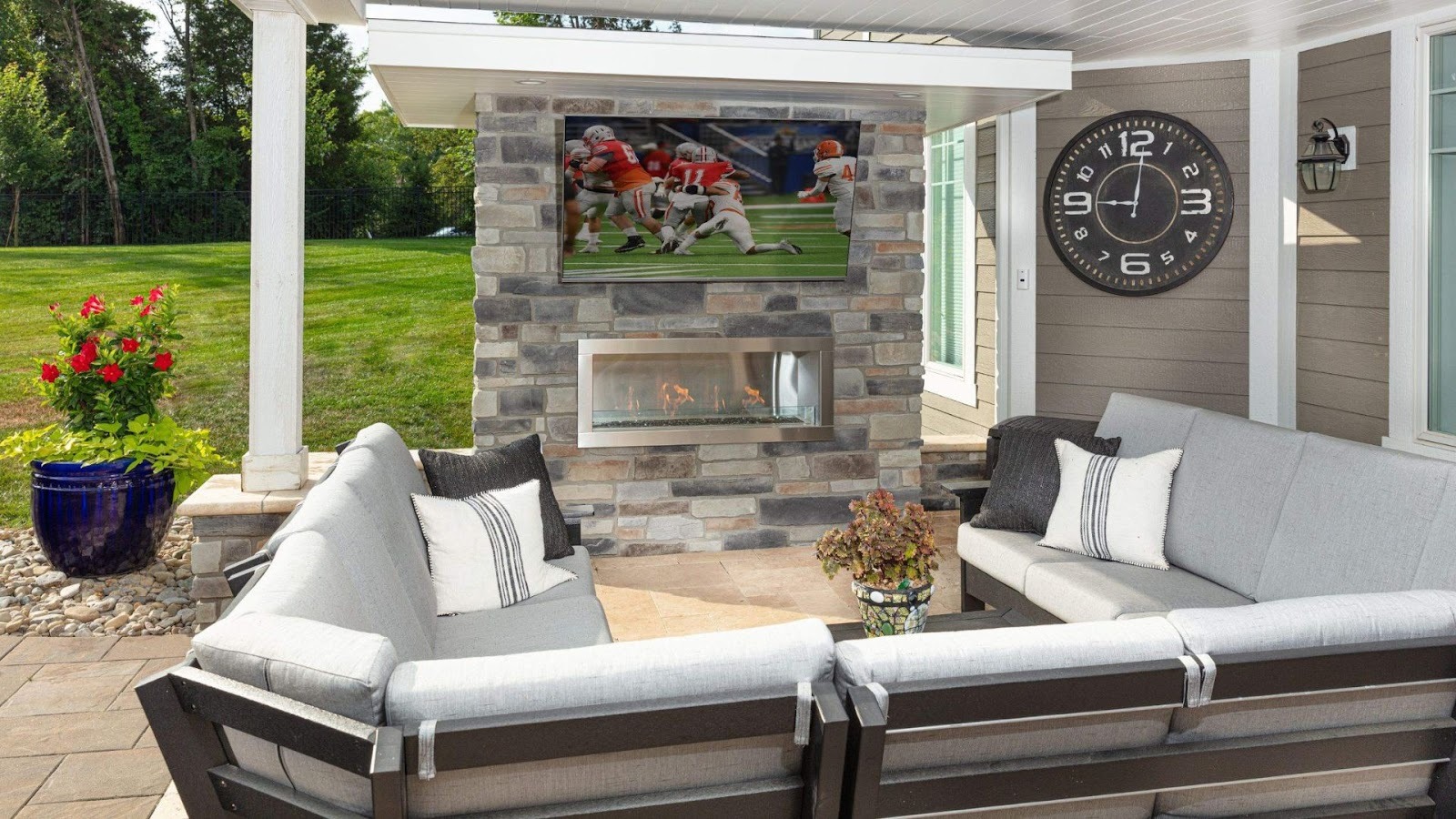
There’s something primal about fire. Put one in your backyard and watch what happens. People migrate toward it. Conversations last longer. Guests linger after dinner instead of heading inside. Even on a Tuesday evening, you’ll find yourself outside just because the fire’s going.
Modern fire features understand this instinct and design for it intentionally.
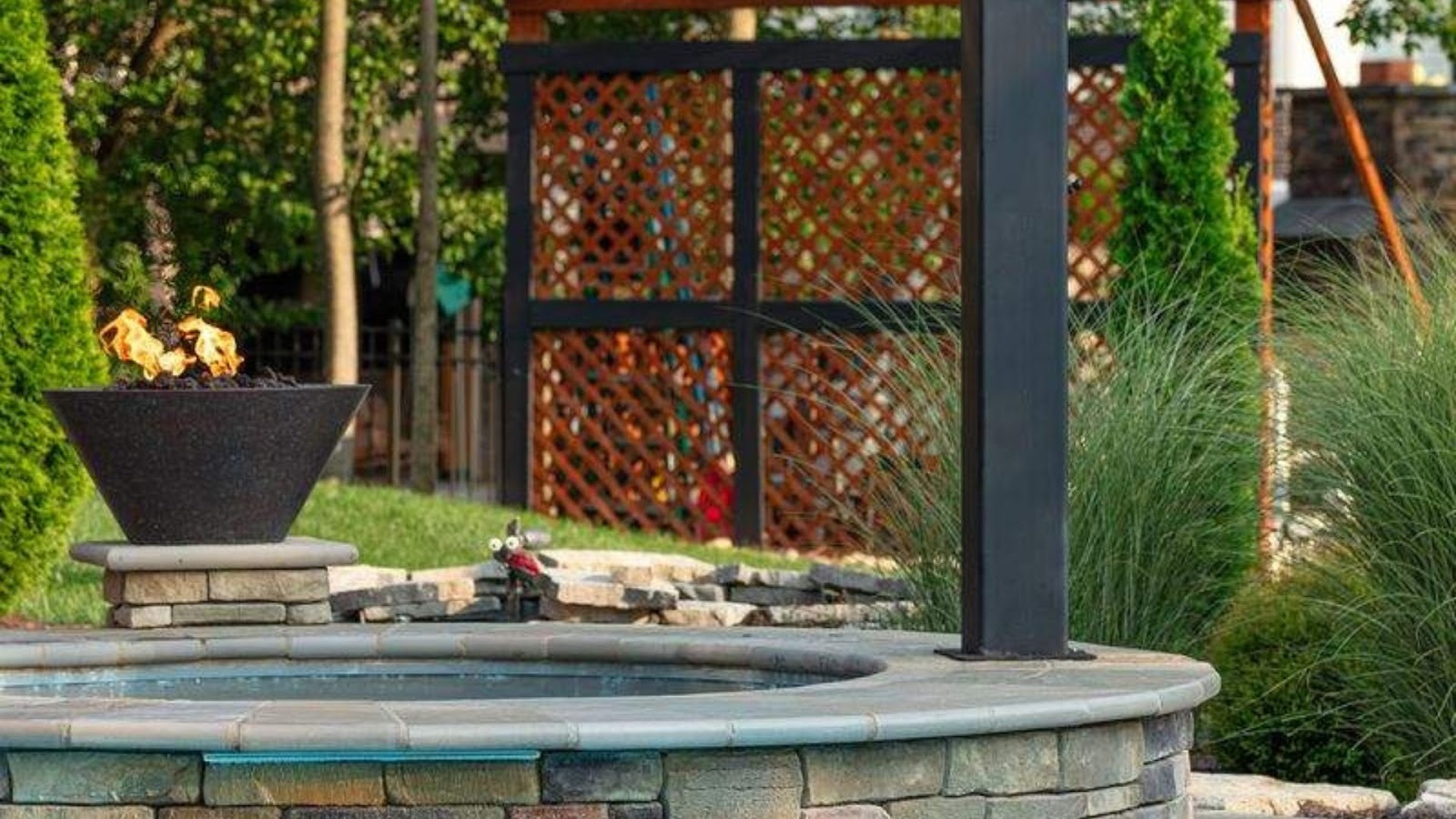
Every good outdoor space needs a focal point. Something that draws the eye, defines the area and gives people a reason to gather there. Modern fire features are architectural elements with clean lines, integrated into the overall design and surrounded by seating that makes you want to sit and stay a while.
They become the anchor point around which everything else revolves.
What Modern Fire Features Look Like
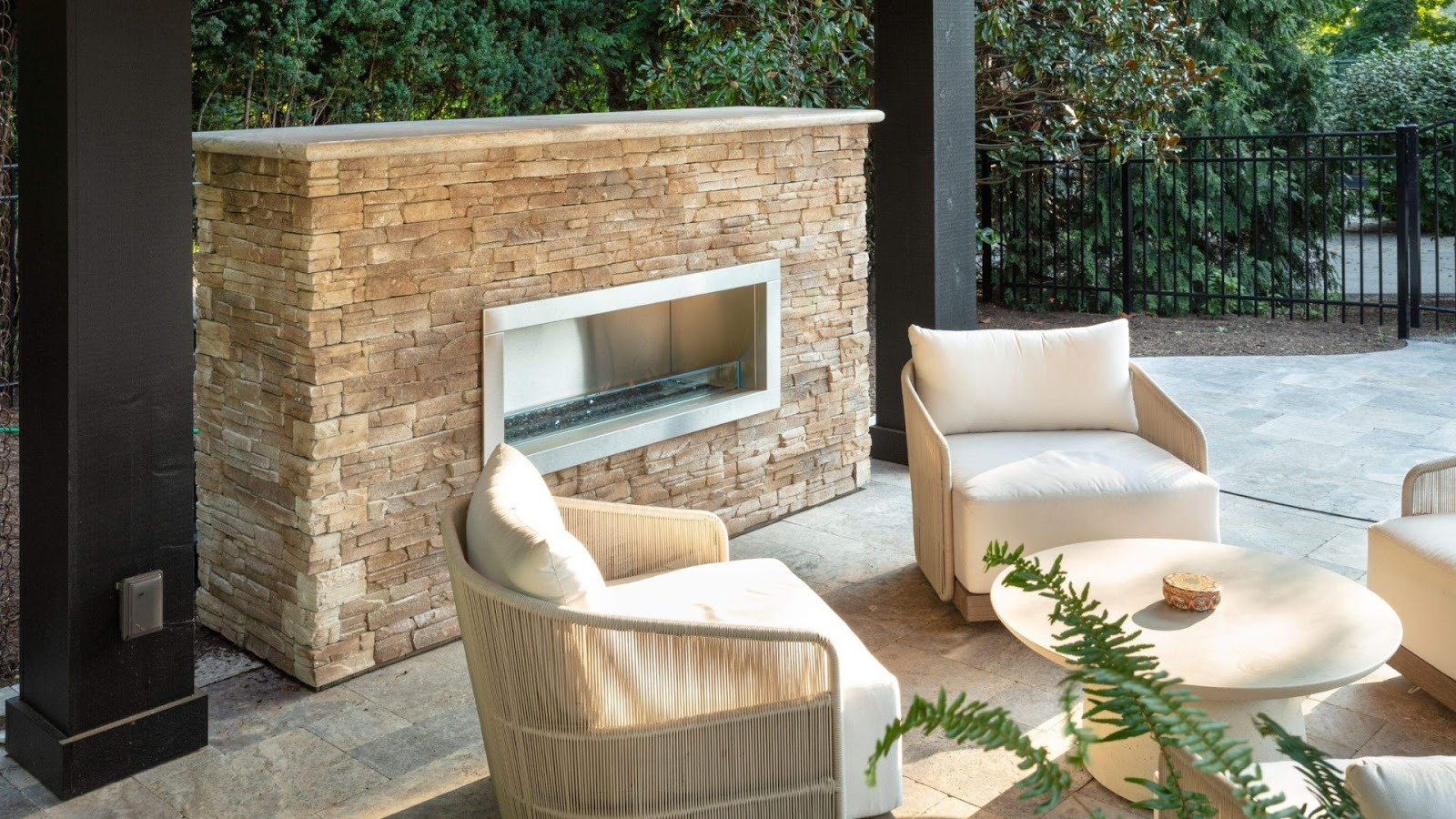
Linear fire pits stretch horizontally rather than sitting in a round bowl. They might be 3 feet long, 5 feet, even 8 feet long; creating a dramatic ribbon of flame that becomes a striking visual element.
Modern fire tables look sleek and provide instant flames. A flat surface for setting drinks, with fire running down the center or contained in a geometric pattern. They work as coffee tables when the fire’s not lit and as gathering points when it is. Height matters here. Firepit height (around 18 inches) for casual seating, or table height (28 – 30 inches) for dining chairs and bar stools.

Built-in fire features integrate directly into seat walls or the patio design itself. Often stone or concrete with clean edges, they become instant gathering places.
4. Modern Privacy Solutions
Here’s a problem most homeowners face: You want to enjoy your backyard without feeling like you’re on display for the neighbors. But you also don’t want to sit inside what feels like a walled compound.
Traditional privacy solutions such as tall wooden fences, dense hedges and brick walls do work, but they’re heavy. They close you in. They make small yards feel smaller and can turn outdoor spaces into something that feels more like a bunker than a retreat.
Modern privacy solutions take a different approach.
They create separation and seclusion without making you feel enclosed. They use strategic screening rather than total barriers. They’re architectural, intentional and often beautiful in their own right, not just functional necessities you tolerate.
What Modern Backyard Design for Privacy Looks Like
- Horizontal slat fencing is one of the most popular modern privacy solutions. Instead of traditional vertical boards, horizontal slats create clean lines that feel contemporary. The gaps between slats allow some airflow and filtered light while still blocking direct sightlines. The horizontal emphasis makes spaces feel wider rather than taller, which helps in smaller yards.
- Slatted screens and panels work as targeted privacy where you need it without enclosing the entire space. Maybe you need screening between your hot tub and the neighbor’s second-story windows, but you don’t need a full fence around your entire yard. Freestanding screens made from wood, composite, metal or frosted panels create privacy zones without commitment to full perimeter fencing.
- Living walls and strategic plantings use plants as architecture. Not a solid hedge wall that takes years to fill in and requires constant trimming. Instead, choose intentional groupings of trees, tall grasses and layered shrubs that create visual barriers while adding texture, movement and seasonal interest. Ornamental grasses like miscanthus can reach 6 to 8 feet and provide excellent screening while looking beautiful. Columnar trees create vertical privacy without spreading too wide.
- Pergolas with partial screening add overhead structure while incorporating side panels or draped fabric where needed. You’re not fully enclosed, but you have definition and privacy from certain angles. Climbing vines on pergola sides create living privacy that changes with seasons.
- Mixed-material solutions combine elements for maximum effect. A low seat wall topped with metal or wood screening. A section of horizontal slat fence transitioning into strategic plantings. Frosted glass panels mixed with natural wood. Combining materials creates visual interest while solving privacy problems at different heights and angles.
Modern Backyard Design Built Around Your Life
Many backyards have one thing in common: They don’t get used as much as they should. You spent money on a patio, bought some furniture, maybe added a grill. But somehow, you’re still inside most of the time.
Modern backyard design fixes that disconnect. When your outdoor space flows naturally from your house, when each area has a real purpose, when there’s a spot that actually draws you outside and when you feel comfortable enough to relax, you stop thinking about “going outside” and just start living there.
Want to figure out what that could look like for your property? Book a consultation and we’ll walk through what makes sense for your yard.