Key Takeaways:
- Plan shade from the beginning, not after your patio is finished. Integrating outdoor shade solutions into your overall landscape design creates a more functional, cohesive space that you'll actually use throughout the day.
- The best shade solution depends on how you live outdoors. Whether it's a pergola, retractable roof, strategic tree placement or a covered living space, choosing the right option starts with understanding how, when and where you spend time outside.
- A layered, professionally coordinated design delivers the best long-term results. Combining structures, landscaping, lighting and hardscaping under one cohesive plan creates a comfortable, attractive outdoor living space while avoiding costly design conflicts later.
If you could only sit outside comfortably before 11 a.m. or after 6 p.m., would you still call your backyard ideal? Outdoor shade solutions are the things many homeowners don't ask about until after the patio is built, the fire feature is installed and the furniture is arranged just right. Then July hits, and by early afternoon nobody wants to be out there. The space looks incredible in photos, but it just doesn't get used the way you imagined.
Shade is usually the piece that gets left out of the plan. It's often treated as an afterthought, something to add once everything else is finished. When it's built into the design from the start instead, it changes how much of the day your outdoor space actually works for you.
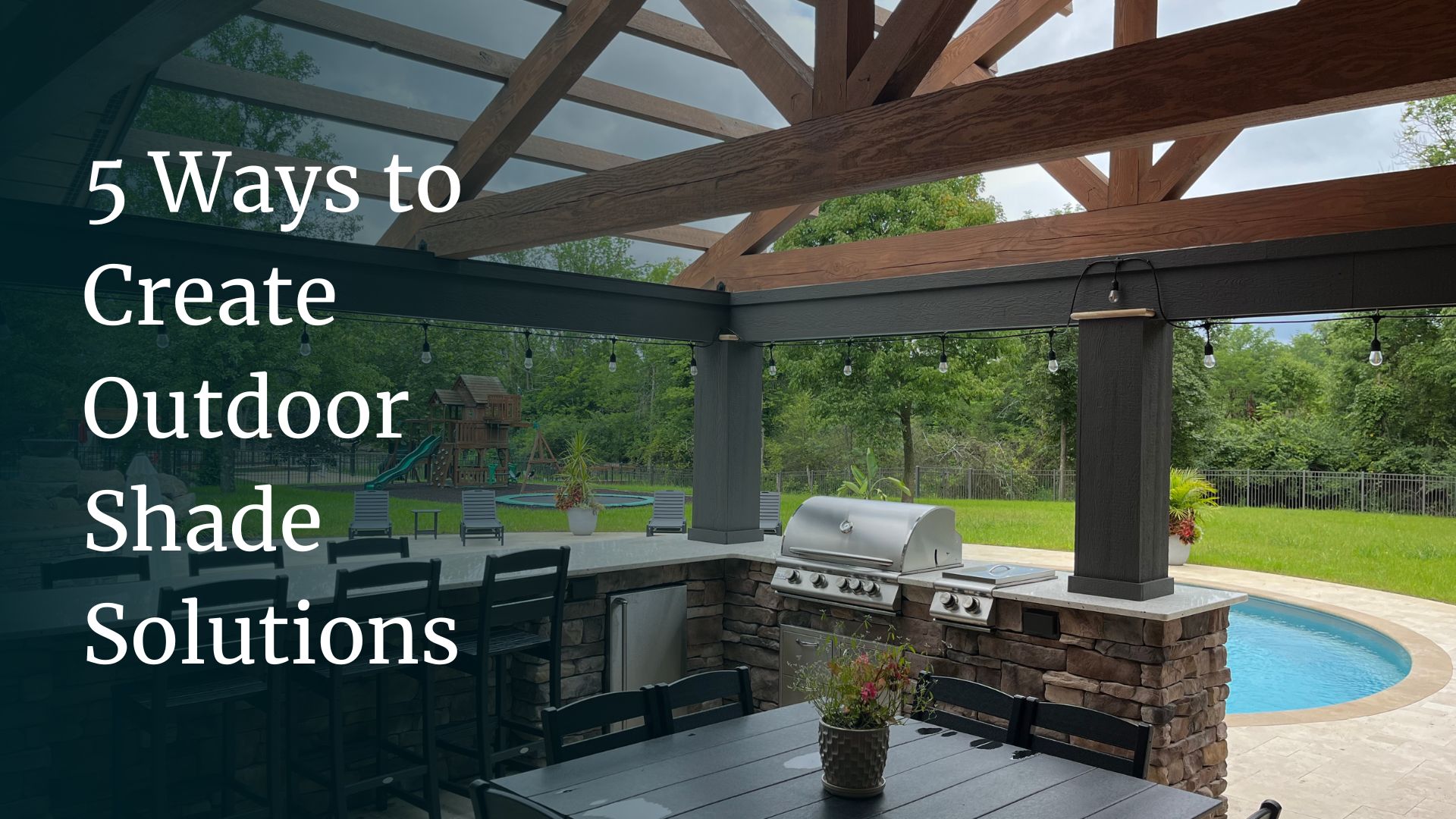
Here are five ways to create outdoor shade, and what's worth thinking through before you choose one.
Why Shade Is About More Than Just Staying Cool
A shade structure that's added in after the rest of the project is done tends to look and feel like exactly that: an add-on. It may not line up with your home's architecture. It may block a view you actually wanted to keep. It may end up in the wrong spot entirely, because the sun's path across your yard was never mapped against how you use the space.
Think about the parts of your day you'd actually want to spend outside: morning coffee, dinner with the kids, hosting friends on a Saturday afternoon. The right shade plan protects those specific windows of time, in the specific parts of your yard where you'll be sitting. That's a very different starting point than picking a product off a list.
1. Custom Pergolas and Shade Structures Built Into the Design
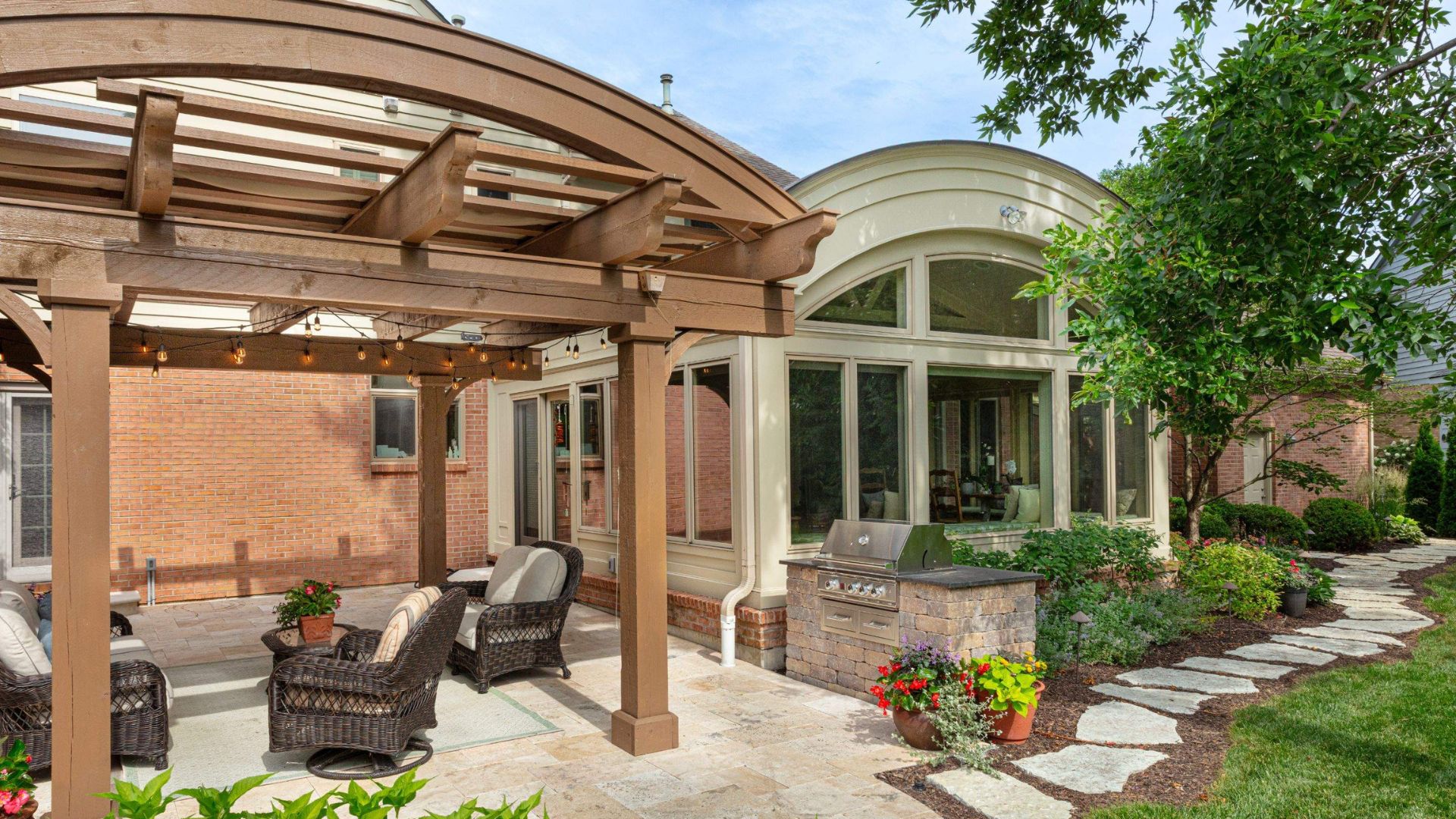
A pergola is one of the most popular ways to create shade, and for good reason. It adds architectural interest while softening direct sun through overhead beams or lattice. But a pergola designed as part of your overall outdoor living space looks and functions differently than one dropped in on its own.
A few things worth considering:
- How the structure's style and materials relate to your home's architecture
- Where it's positioned relative to your seating, dining and cooking areas
- How much shade you actually need at different times of day
- Whether it should support additional elements like lighting, fans or climbing plants
Design Choices That Affect Cost, Durability and How Much Shade You Get
Materials matter with a pergola. Wood, vinyl and aluminum each come with different maintenance needs and lifespans, and the spacing of the beams determines how much sun actually gets through. These are the kinds of decisions that are easy to get wrong without someone walking you through the tradeoffs first.
2. Louvered and Retractable Roof Systems
If a fixed structure feels too permanent for how your household actually uses the yard, a louvered or retractable system offers more flexibility. You can open it up on a mild spring evening or close it down completely during a summer downpour, all without moving a piece of furniture.
Families who entertain often, or who want their outdoor space usable in more types of weather, tend to get the most value from this option. It's a bigger investment upfront, but it gives you a level of control a fixed pergola simply can't.
Motorized systems need electrical work planned early, not added later. Drainage has to be considered so water doesn't pool on the roof or run off into the wrong part of the yard. And like any mechanical system, it needs a maintenance plan to keep it running smoothly for years, not just for the first season.
3. Natural Shade Through Trees and Strategic Planting
Not every shade solution needs to be a structure. Mature trees and thoughtfully placed plantings create shade that feels organic, cools the surrounding air and adds value to your landscape long after the leaves fill in. Plus, they can provide privacy and block unwanted views.
This is the one solution on this list that often requires patience. A newly planted tree won't offer real shade for several years, so if this is part of your plan, it's worth starting early, even if the structure or hardscape isn't happening until later phases of your project.
Natural shade works best when it's planned alongside everything else, not as a separate decision. The right tree in the right spot can complement a pergola or covered structure instead of competing with it for space, light or root room.
4. Covered Living Spaces and Four-Season Additions
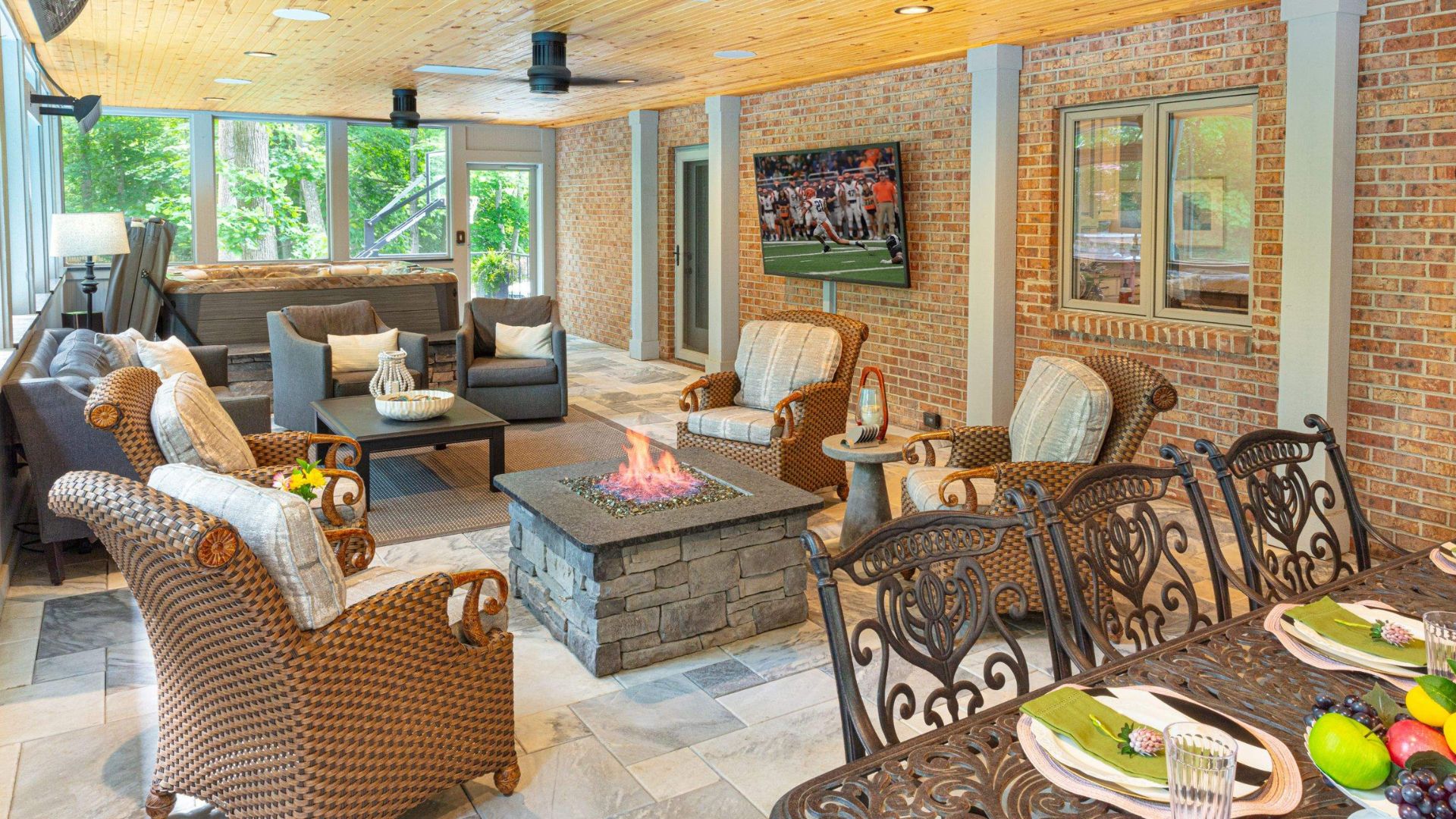
For homeowners who want their outdoor space to function almost like another room of the house, a fully covered structure, sometimes with a fireplace, heaters or even four-season enclosures, goes a step beyond a pergola or awning.
This option tends to make sense when you're looking for:
- Year-round or three season usability, not just summer shade.
- A dedicated outdoor kitchen or dining area protected from the elements.
- A space that can host a crowd regardless of weather.
Done well, this kind of structure blurs the line between indoors and outdoors. It becomes a genuine extension of your home's living space, not a separate feature in the backyard.
5. Layering Shade Elements for a Cohesive Outdoor Room
The homeowners who end up happiest with their outdoor space usually aren't choosing just one of these options. They're combining a few that work for their yard and their preferences. A pergola paired with strategic planting. A retractable awning alongside a shade tree that will mature in a few years. Layered lighting that makes the space just as enjoyable after the sun goes down.
Each element supports the others when they're designed together: The planting softens the structure, the lighting extends the hours you can use the space and the hardscape ties it all back to the rest of your property.
Why One Team Coordinating Every Phase Prevents Mismatched Results
This is where a lot of projects run into trouble. When the structural team, the planting crew and the lighting installer aren't working from the same plan, the gaps show up later, with a pergola that doesn't leave room for the tree that was supposed to go next to it, or wiring that wasn't planned for before the hardscape went in. A single team overseeing every phase is what keeps all of these pieces working together instead of against each other.
How to Choose the Right Shade Solution for Your Property
Questions to ask before committing to a design
- How many hours a day, and which hours, do you actually want to use this space?
- Do you want flexibility to open things up, or are you looking for something permanent?
- Is this a standalone project, or part of a larger outdoor living plan?
- How much maintenance are you realistically willing to take on?
Not sure which shade solution fits your space? Let's figure out the right shade solution for how you actually use your yard. Schedule a design consultation today!