
Adding landscaping for privacy to a yard sounds simple until you start asking the right questions. How much coverage do you really need? Will it work year-round? What happens when grade changes, drainage or existing structures get involved? How will this new feature affect your landscape design?
The problem is that there is no one right answer. The correct choice for you depends on a lot of different factors.
In this article, we walk through the most common privacy solutions, including fencing, walls and strategic plantings, so you can understand how each one works, where it falls short and how to choose the option that actually fits your space and how you use it.
Understanding Your Privacy Needs
Before you start comparing cedar boards or browsing arborvitae varieties, take a step back. The most effective landscaping for privacy solution isn’t necessarily the most expensive or elaborate one. It’s the one that aligns with your specific needs, property characteristics and lifestyle.
Most privacy regrets come from skipping this step. Homeowners rush to install something, only to realize later it doesn’t block the right views, doesn’t work year-round or clashes with the rest of the yard. Getting clear up front saves money, time and frustration.
Here are a few things to consider so you can make the best decision for your needs.
Start With the Type of Privacy You Need
Not all privacy is the same.
Do you need a full visual barrier from ground to roofline?
Or are you just trying to block a specific sightline, like neighbors overlooking your patio or windows facing the street?
Those two goals require very different solutions. A six-foot fence might be perfect for a backyard gathering space. That same fence won’t do much for a second-story window or a raised neighboring lot. Knowing what you’re trying to block (and from where) keeps you from overbuilding or missing the mark.
Timeline Matters More Than People Expect
How soon do you want privacy?
Fences and walls deliver it immediately. Plantings don’t. Even fast-growing evergreens take years to create meaningful screening. That timeline might be fine if you’re planning to stay long-term, or a dealbreaker if you’ve just moved into a wide-open neighborhood and want results fast.
There’s no right answer here. But there is a wrong one: expecting instant results from something that simply can’t provide them.
Don’t Skip the Rules and Constraints
It’s not the fun part, but it’s critical.
Local codes and HOA guidelines can limit fence height, materials, placement and even plant choices. Slopes, drainage patterns and unclear property lines can also restrict what’s possible, or add cost if they’re addressed late instead of early.
A little homework now prevents expensive fixes later.
A Few Questions That Can Help Clarify Everything
If you’re unsure where to start, these questions can help bring things into focus:
- Where do you actually need privacy? Be specific.
- Do you need screening year-round or only during the warmer months?
- Are slopes, drainage or property lines a factor?
- Does the privacy solution need to tie into patios, lighting or existing structures?
- How much ongoing maintenance are you realistically willing to handle?
Answering those questions makes the next step (comparing fences, walls and plantings) much clearer. You stop reacting to trends and start making decisions that fit your space.
And that’s exactly how professionals approach it: by solving the problem first, then choosing the solution that makes sense.
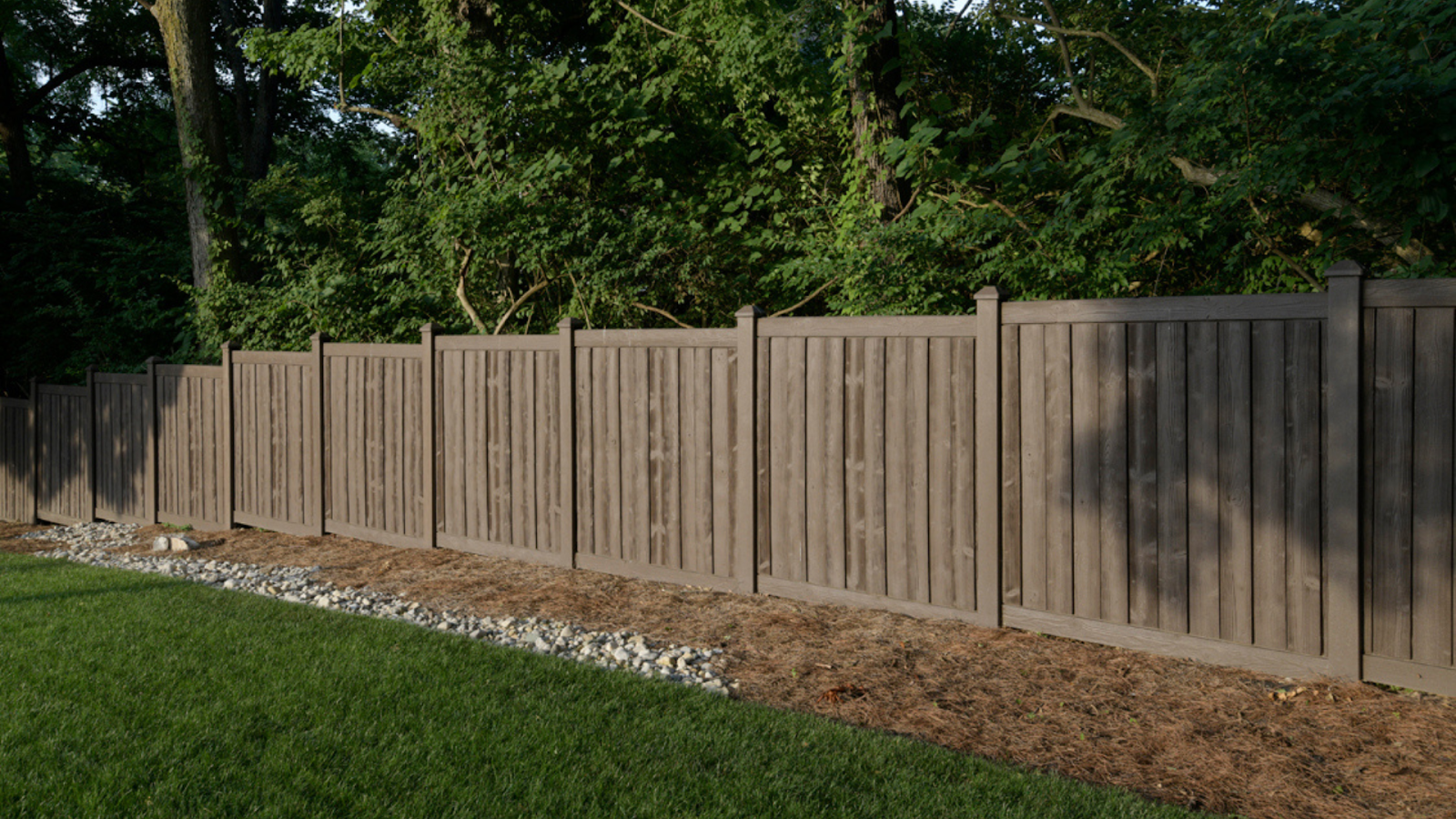
Fencing: Fast Privacy With Clear Boundaries
Fencing is often the first solution homeowners consider, and for good reason. It’s straightforward, effective and delivers privacy immediately. When done well, it creates clear boundaries and solves specific privacy problems without a long wait.
There’s no one-size-fits-all fence. The right choice depends on durability, appearance and maintenance expectations.
Wood Fencing
Wood fencing remains a popular choice because of its flexibility. It can be customized in height, spacing and style, making it easy to match a home’s architecture or landscape design. That said, wood requires ongoing care. Staining, sealing and occasional repairs are part of the long-term commitment, especially in climates with moisture and seasonal changes.
Vinyl Fencing
Vinyl fencing appeals to homeowners who want consistency and minimal maintenance. It doesn’t rot, warp or require painting, which makes it a set-and-forget option for many properties.
The tradeoff is aesthetic range. Vinyl offers fewer style variations and can feel more uniform compared to natural materials.
Composite Fencing
Composite fencing sits between wood and vinyl in both appearance and performance. It offers a more natural look than vinyl while being far more durable than traditional wood. Composite materials resist fading and weathering, making them a solid option for homeowners who want longevity without frequent maintenance.
Metal Fencing
Metal fencing is most often used when security or durability is the primary concern. While it typically doesn’t provide full visual privacy on its own, it works well as an accent or boundary solution, especially when paired with plantings or walls. Its clean lines can complement modern designs, but it’s usually not the right choice for complete screening.
Pros of Fencing
- Immediate privacy once installed
- Clearly defines property lines and boundaries
- Predictable cost range compared to more complex solutions
- Works well alongside yards and property edges
- Can add a layer of security, especially for pets and children
- Available in a wide range of styles and heights
Cons of Fencing
- Can feel harsh or boxed-in if not thoughtfully placed
- Provides limited sound reduction
- May require permits or HOA approval
- Costs can increase on sloped lots or uneven terrain
- Requires coordination with grading, drainage and footers
- Ongoing maintenance, especially with wood
Best Use Cases for Fencing for Privacy
Fencing tends to work best when the goal is clear, practical privacy rather than layered or architectural screening.
- Tight lot lines where space is limited
- Straightforward boundary separation
- Situations where privacy is needed quickly
- Homes with pets that need a secure enclosure
- Projects where fencing is softened with plantings to reduce visual impact
One important thing to understand: The success of fences depends on how well they’re integrated with the site itself, including grades, drainage, adjacent hardscapes and nearby structures. That’s why choosing the right team is just as important as choosing the fence.
If you’re evaluating contractors for this type of work, this guide on choosing the right landscape construction company can help you understand what to look for before moving forward.
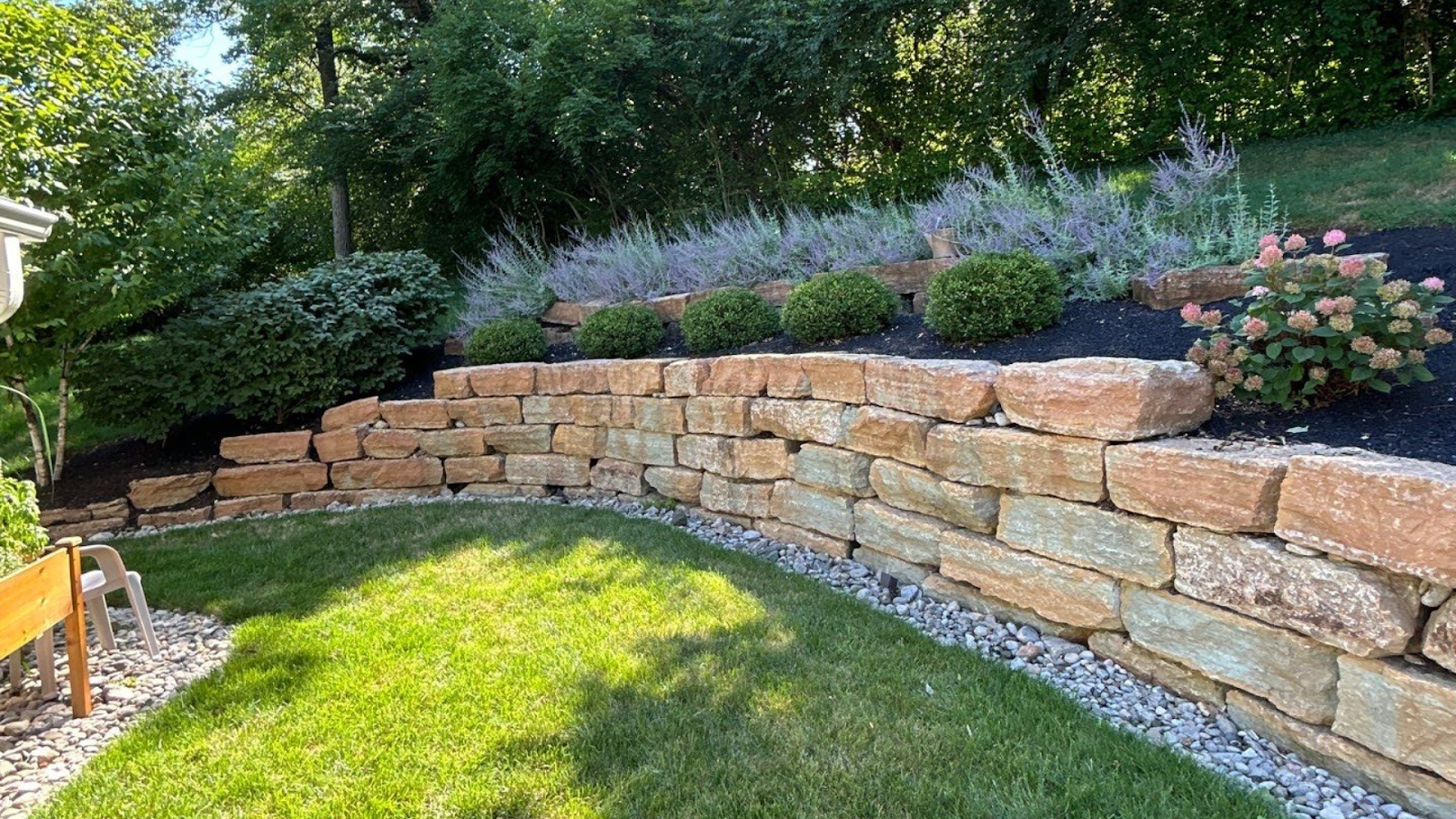
Walls: Structural Privacy That Becomes Part of the Architecture
Walls are a different category altogether. Unlike fencing, they don’t just block a view. When planned correctly, they become part of the structure of the outdoor space itself.
Brick Walls
Brick offers a timeless look and holds up well over the decades. It provides solid visual separation and some sound buffering, especially in tighter spaces. Brick tends to work best in more formal designs or in homes whose architecture already leans traditional.
Natural Stone Walls
Stone walls feel substantial. They add texture, depth and weight to an outdoor space while providing excellent privacy. Because stone varies naturally, these walls often feel less rigid than fencing and blend well into landscape-heavy designs.
Stucco Walls
Stucco walls are often used when the goal is a clean, finished look that visually ties back to the home. They can be shaped and finished in ways that feel more architectural than decorative, making them a good fit for modern or Mediterranean-style spaces.
Concrete Block Walls
Concrete block walls are highly durable and practical, especially in areas with wind or grade challenges. While they may start as a structural solution, they’re often finished with stone, stucco or seating elements to soften their appearance.
Pros for Using Walls for Privacy
- Creates strong visual separation and improved sound buffering
- Can double as seating, retaining or elevation control
- Holds up well over time with minimal ongoing maintenance
- Integrates seamlessly with patios, outdoor kitchens and fire features
- Adds a sense of permanence to the space
Cons for Using Walls for Privacy
- Higher upfront investment compared to fencing or plantings
- Requires proper footers, drainage and grading
- Often not something that can be easily added later without rework
- Should be planned early to avoid conflicts with utilities and hardscapes
Best Use Cases for Walls Used in Landscaping Privacy
Walls tend to shine when privacy is part of a larger outdoor living plan.
- Patios, outdoor kitchens and fire features
- Properties with elevation changes or slope challenges
- High-wind areas where fencing or plantings struggle
- Spaces where privacy and structure need to work together
One important thing to know: walls succeed or fail long before they’re visible. Site preparation, drainage and coordination with surrounding elements matter just as much as the materials themselves. That’s why wall-based privacy solutions are best addressed while you are designing your outdoor living space.
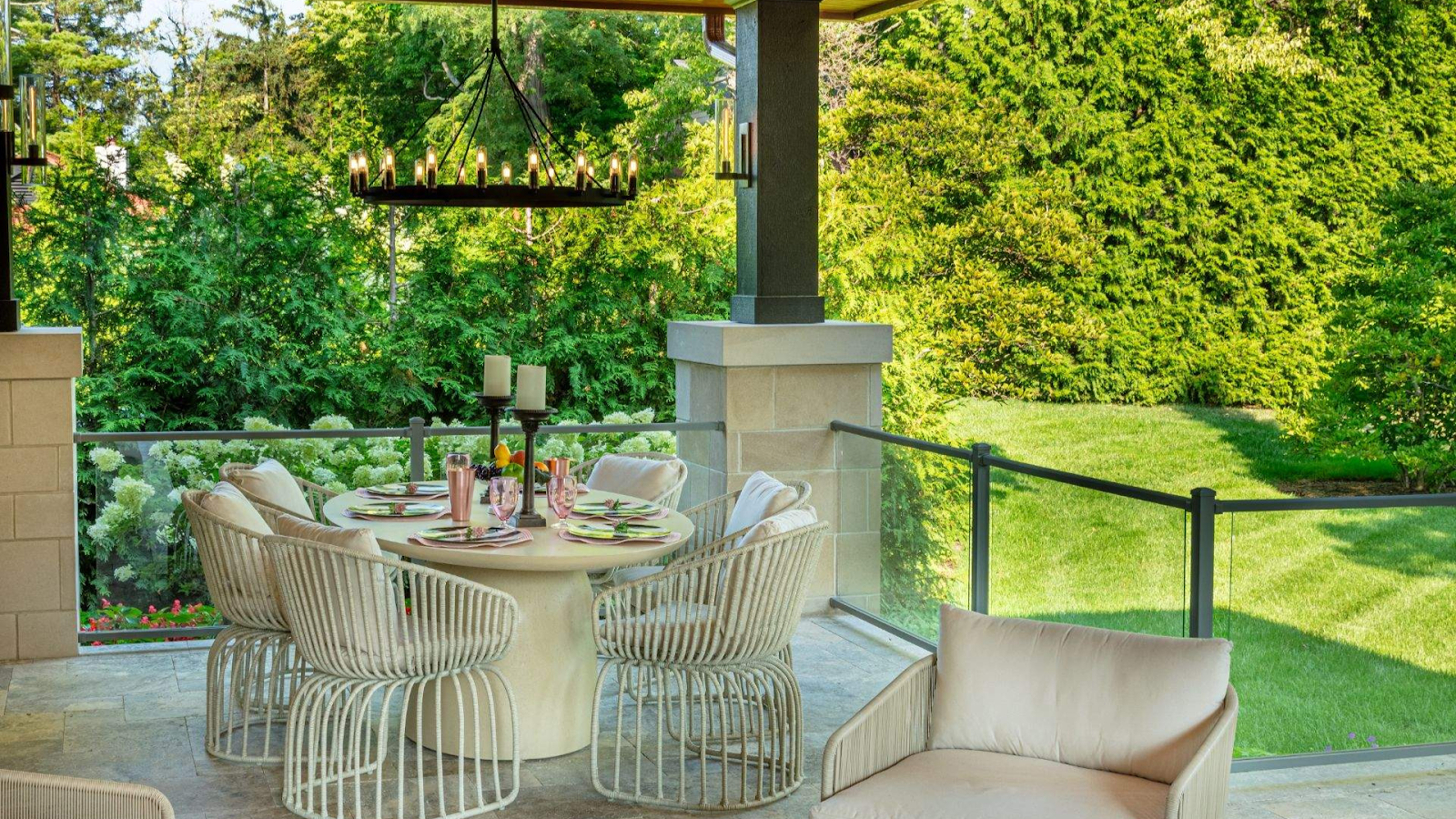
Strategic Plantings: Natural Privacy That Evolves Over Time
Plant-based privacy works differently from fencing or walls. It doesn’t arrive all at once. It grows into place. And when it’s planned well, it feels less like a barrier and more like part of the landscape itself.
This approach appeals to homeowners who want privacy without closing themselves off or who value how a space looks and feels just as much as what it blocks.
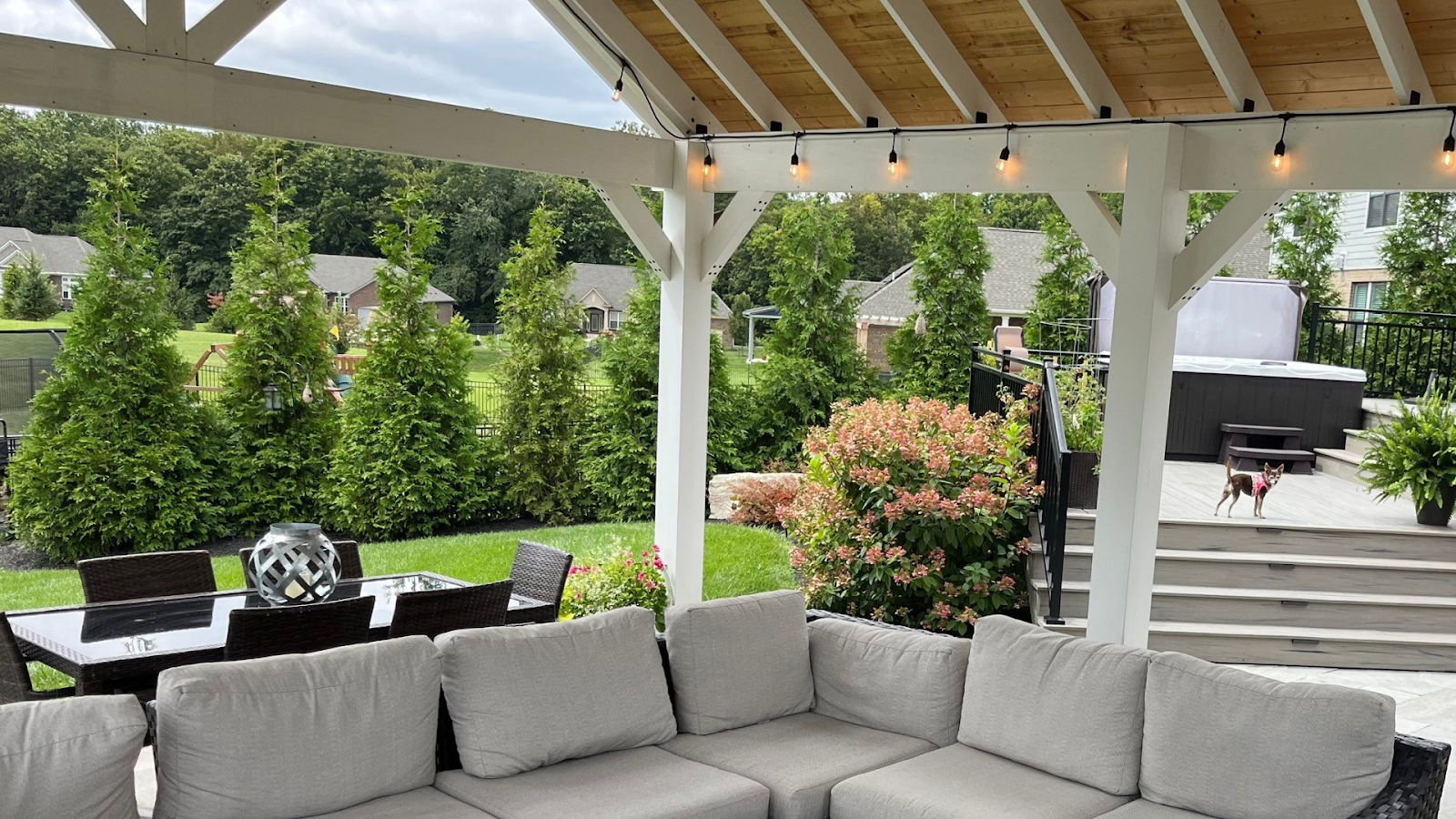
Evergreen Screening
Evergreens are often the backbone of plant-based privacy. Options like arborvitae, Leyland cypress, holly and bamboo provide year-round coverage when selected and spaced correctly. The keyword there is correctly. Growth rates, mature size, root structure and sun exposure all matter. When those details are ignored, plantings struggle or outright fail.
Deciduous Screening Plants
Deciduous trees and shrubs can work well when privacy is mainly needed during warmer months. They allow more light in winter and create a softer, more open feel when leaves drop. This can be a benefit or a drawback, depending on how and when the space is used.
Layered Planting Strategies
The most effective planting plans usually involve layers. Taller trees provide overhead screening. Shrubs fill in mid-level sightlines. Groundcover ties everything together visually. This approach feels natural, blocks views more effectively and avoids the “hedge wall” look that can feel heavy or forced.
Pros for Using Strategic Plantings to Provide Landscaping Privacy
- Creates a natural, layered appearance
- Enhances the overall look and long-term value of the property
- Can be tailored to seasonal use and changing light conditions
- Blends seamlessly with patios, decks and outdoor rooms
- Adds seasonal interest, texture and color
- Supports wildlife and contributes to air quality
Cons for Using Strategic Plantings to Provide Landscaping Privacy
- Takes time to mature and provide full screening
- Requires thoughtful horticulture planning, not guesswork
- Some varieties create seasonal gaps if not layered properly
- Ongoing care can be burdensome: spacing, pruning and plant health all affect results
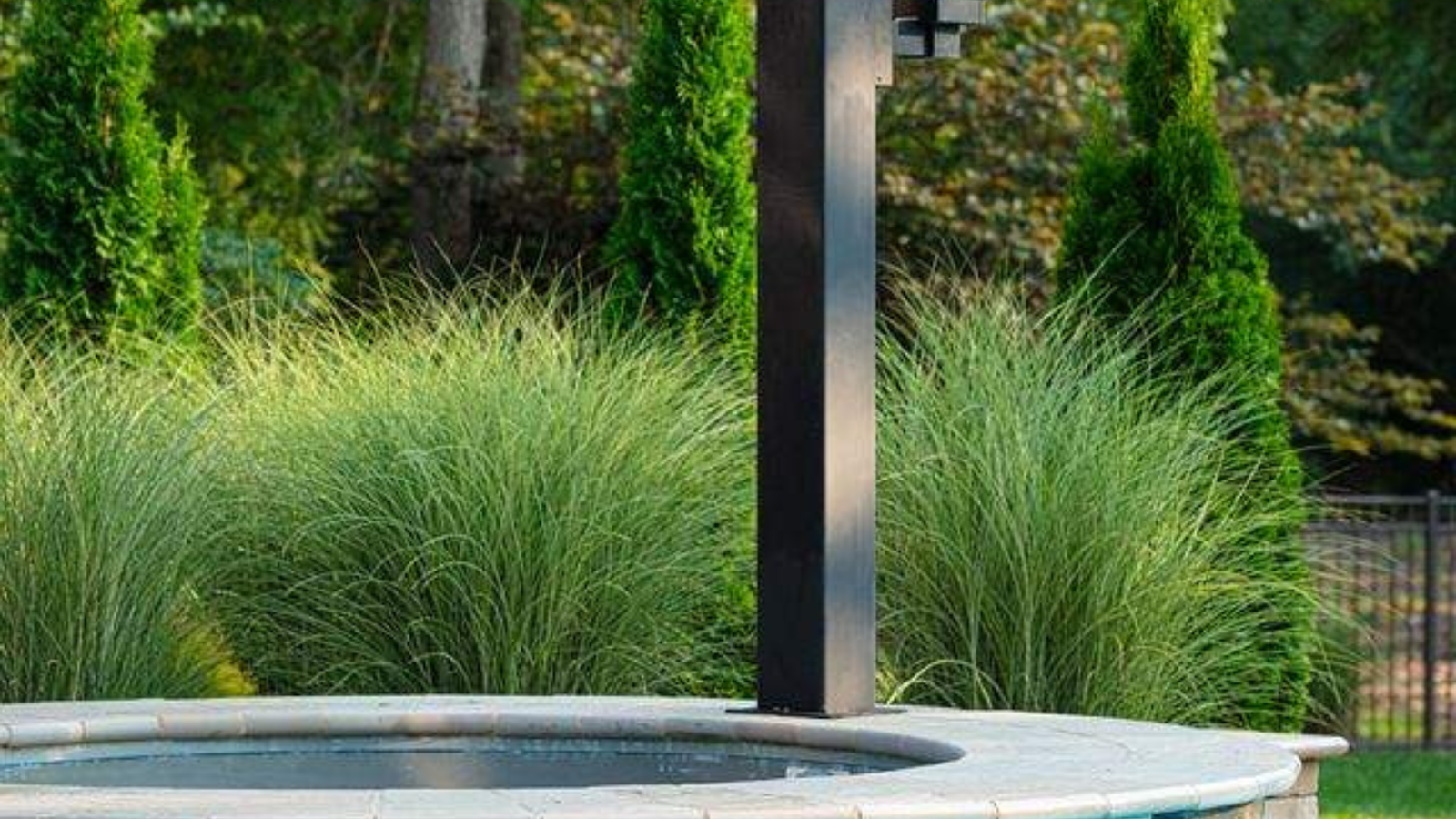
Best Use Cases for Using Strategic Plantings to Create Privacy
Strategic plantings work especially well when privacy needs to feel subtle rather than structural.
- Softening the look of fences or walls
- Creating separation without feeling enclosed
- Larger properties where layered solutions make sense
- Spaces where aesthetics are just as important as screening
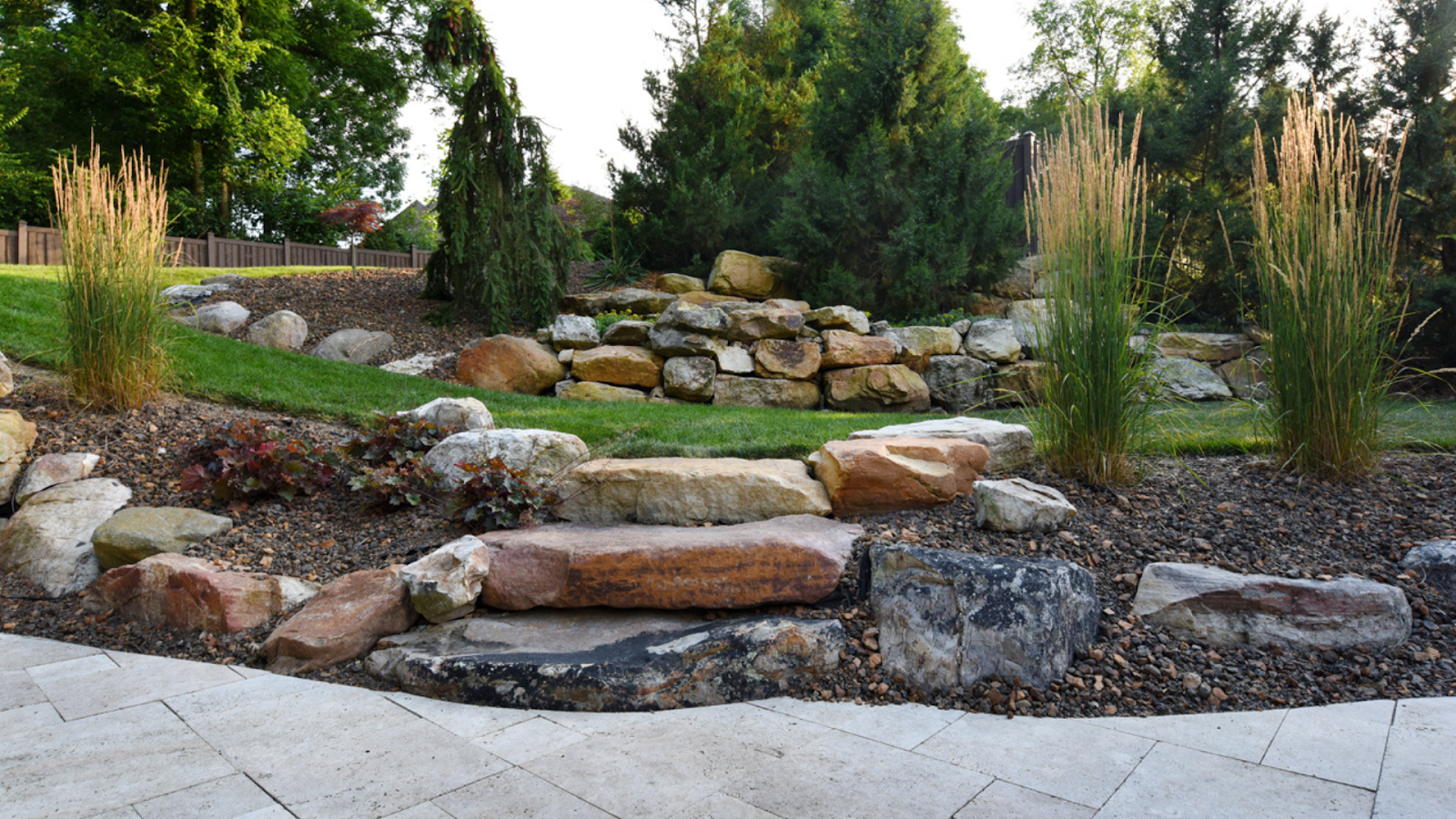
It’s worth saying this plainly: Planting for privacy is not about planting more plants. It involves choosing the right ones and placing them with intention.
How the Best Privacy Solutions Often Combine All Three
In practice, the most successful privacy designs rarely rely on just one solution. They combine elements, each doing a specific job, so the space works better as a whole.
Structural features provide permanence. Plantings add softness and life. Fencing defines boundaries where clarity matters.
Problems tend to show up when each element is handled separately. A fence goes up first, then plantings are added later without a clear plan. Walls, screens or grade changes get introduced without considering how they relate to what’s already there. No one is responsible for how everything fits together, and gaps start to appear: visually, functionally and sometimes literally.
That’s where frustration sets in.
When privacy is planned as part of a single, coordinated design, the result is very different. A fence becomes a backdrop instead of a focal point. A wall blocks that hideous view and also supports seating, changes elevation or anchors an outdoor room. Plantings aren’t filler. They’re doing specific work.
Some common examples:
- A fence softened with climbing vines so it feels less rigid over time
- Low walls with integrated planters that add greenery without sacrificing structure
- Fencing paired with layered plantings to improve privacy without closing off the space
Privacy That Works: Now and Long Term
The right privacy solution is based on an understanding of how you live in your space, what needs to be screened and how everything fits together. When privacy is planned early and well, it feels natural. The space flows. Nothing looks forced. And you don’t end up fixing gaps later that could’ve been addressed from the start.If you’re unsure which direction makes sense for your property, a conversation can help bring clarity. Schedule a design consultation to talk through your space, your goals and the privacy options that will work best in your yard.