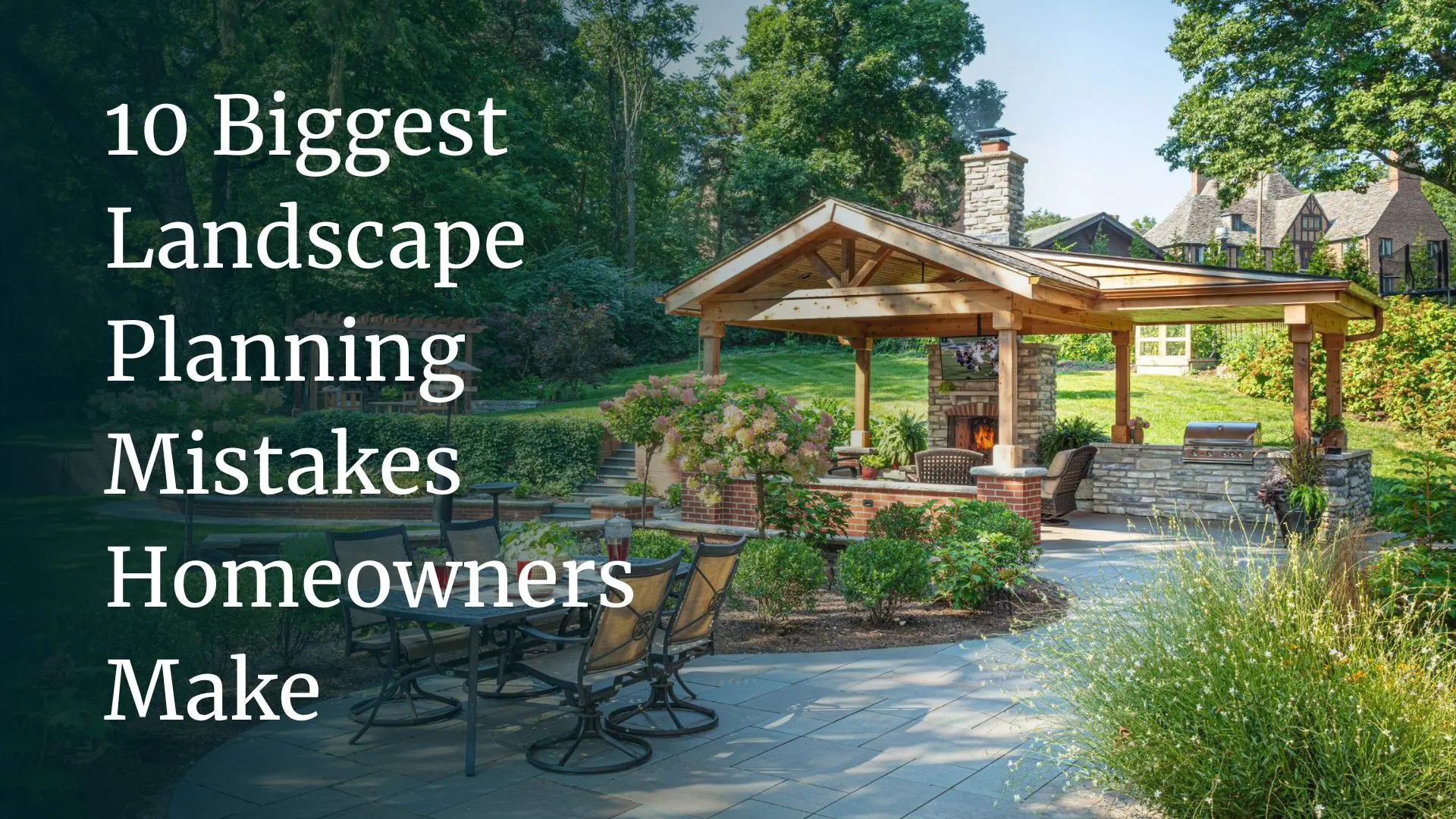
Most landscape mistakes don’t happen because homeowners make bad decisions. They happen because critical details get missed early in the planning process. Landscaping projects are complex, with many moving parts, and it’s easy to overlook how one decision affects everything else.
Understanding the most common planning mistakes can help you avoid costly rework, frustration and missed opportunities. Whether you’re starting fresh or refining ideas, knowing what to watch out for puts you in a better position to create a landscape that works as well as it looks.
Mistake #1: Prioritizing Aesthetics Over Functionality
Many landscape projects look impressive at first glance, but fall short once people start using them. That’s because they were designed to look good, not to work well.
When aesthetics lead the decision-making, functionality often gets overlooked. The result is a landscape that photographs beautifully but creates daily frustration for the homeowner.
Why This Mistake Is So Common
Most homeowners start with inspirational images. They see a patio, a pool or an outdoor kitchen they love and try to recreate it without understanding how all the pieces need to work together.
This often leads to:
- Outdoor spaces that feel disconnected or awkward to navigate.
- Features placed without considering how people move through the yard.
- Beautiful designs that ignore real-world factors like drainage, utilities or sun exposure.
These gaps often don’t show up in renderings, but they absolutely show up after installation.
What Function-First Design Actually Looks Like
A functional landscape starts with asking better questions before choosing materials or features.
A well-planned design considers:
- How the space will be used day to day, not just during special occasions.
- Where people naturally walk, gather, cook and relax.
- How sun, shade, wind and elevation affect comfort.
- How utilities, drainage and access support long-term performance.
The most successful landscapes are designed by professionals who understand how every element (hardscape, planting, drainage, lighting and construction) needs to work together as one system. When functionality is built into the plan from the start, the landscape looks good on day one and for years to come.
Mistake #2: Treating the Landscape as Separate Projects
A common reason landscapes feel disjointed is that they weren’t planned or coordinated as one complete effort. Instead, they’re handled in pieces: a patio one year, a fire feature the next, planting later on, with each decision made in isolation.
This approach often feels practical in the moment. It spreads costs out over time and allows projects to move forward as needs arise. The problem isn’t phasing. It’s the lack of a shared vision guiding each phase.
Most homeowners don’t set out to fragment their landscape. It usually happens when projects are spaced out without a clear long-term plan, or when different contractors are responsible for different pieces. Without someone overseeing how everything connects, gaps begin to form between materials, elevations, drainage and how spaces flow together.
Even when individual features are well built, homeowners often experience:
- Mismatched materials and finishes across the property.
- Awkward transitions between patios, walkways and lawn areas.
- Features that compete visually instead of working together.
- Missed opportunities to coordinate grading, drainage or access.
- Higher costs due to rework or retrofitting.
At Site Group, this is where a single point of contact makes a meaningful difference. Instead of managing separate pieces, homeowners work with one team leader who understands the full scope of the project and collaborates with our in-house experts at every stage. This allows each phase to benefit from specialized knowledge while still being guided by one cohesive plan.
Projects don’t have to be built all at once. What matters is having a clear vision from the beginning, so every phase moves the landscape closer to that end goal. With expert input and coordinated oversight, the result is a landscape that evolves intentionally over time, without gaps, surprises or compromises along the way.
Mistake #3: Ignoring How the Space Will Actually Be Used
A landscape can be beautifully designed and still fail, simply because it doesn’t fit the way the homeowner lives.
This mistake happens when outdoor spaces are planned around idealized scenarios instead of everyday routines. The result is often a yard that looks impressive but doesn’t naturally invite use.
When Design Is Based on Assumptions
It’s easy to overestimate how a space will be used. Homeowners imagine hosting frequent parties, cooking elaborate outdoor meals or spending entire afternoons outside. In reality, daily life looks different.
Designs based on assumptions often include:
- Large entertaining areas that only get used a few times a year.
- Fire features placed where people don’t naturally gather.
- Outdoor kitchens designed for events instead of weeknight meals.
- Play areas positioned far from where adults actually spend time.
Nothing is “wrong” with these features; they’re just not aligned with real habits.
Over time, patterns emerge:
- Certain areas become the default hangout, while others sit unused.
- People take indirect paths because walkways don’t match natural movement.
- Features feel inconvenient rather than inviting.
- The yard becomes something to look at instead of a space to live in.
These issues rarely feel dramatic, but they slowly chip away at enjoyment.
Mistake #4: Underestimating Drainage and Grading
Drainage and grading are rarely the most exciting parts of a landscape project, which is exactly why they’re often underestimated. Unfortunately, they’re also the foundation on which everything else depends.
When water movement and elevation changes aren’t addressed early, even the most beautiful landscape features can fail over time.
When not handled properly, homeowners often experience:
- Standing water after heavy rain.
- Shifting or settling patios and walkways.
- Erosion around foundations or retaining walls.
- Premature failure of plant material.
- Ongoing maintenance and repair costs.
At that point, fixes are more disruptive and far more expensive than if the issues had been addressed upfront.
Mistake #5: Choosing Materials That Don’t Match the Climate
A material can look perfect in a showroom or online and still be the wrong choice for your yard. When materials aren’t selected with the local climate in mind, problems often show up faster than expected.
This mistake doesn’t usually come from poor taste. It comes from choosing materials based on appearance alone.
Common oversights include:
- Selecting hardscape materials that don’t handle freeze–thaw cycles well.
- Using finishes that fade, stain or crack under constant sun exposure.
- Choosing wood or composites without considering moisture levels.
- Installing materials that require more maintenance than expected.
What works in one region may struggle in another.
How Climate Affects Performance
Your climate plays a major role in how materials age over time. Temperature swings, moisture, sun exposure and soil conditions all influence durability.
When materials aren’t designed for the local climate, homeowners risk cracking and shifting surfaces, early discoloration, ongoing repairs and outdoor structures that simply don’t last.
A climate-appropriate selection process considers:
- Seasonal temperature fluctuations.
- Moisture levels and drainage conditions.
- Sun exposure throughout the year.
- Long-term maintenance expectations.
- Proven performance in similar environments.
When materials are chosen for how they perform, not just how they look, the landscape holds up better, requires less upkeep and delivers value for years to come.
Mistake #6: Forgetting About Utilities, Access and Infrastructure
Utilities, access and infrastructure are often overlooked during planning. Gas, electric and water locations may not be fully mapped. Conduit for future lighting or audio gets skipped. Irrigation zones and water pressure aren’t evaluated, and service access for maintenance is rarely considered. Equipment placement and screening are frequently left as afterthoughts. These are the details that form the backbone of a landscape that functions well over time.
When these elements are missed, problems tend to surface quickly. Outdoor kitchens may not be able to support the appliances homeowners want. Lighting is added later with visible wiring or limited coverage. Hardscapes have to be cut or removed to run utilities, and equipment ends up in visible or inconvenient locations. The result is higher costs, unnecessary rework and decisions that become reactive instead of intentional.
A well-coordinated landscape design addresses infrastructure early, before surfaces are installed and finishes are finalized.
That means:
- Planning utilities alongside layout and circulation.
- Coordinating experts across hardscape, planting, lighting and construction.
- Allowing for future upgrades without disruption.
- Protecting access for long-term service and maintenance.
Mistake #7: Designing Spaces That Don’t Scale Properly
Scale is one of the hardest things to get right, and one of the easiest to overlook. A feature can be well-built, thoughtfully detailed and still feel “off” simply because it’s the wrong size for the space around it.
When scale is misjudged, landscapes tend to feel either cramped or overwhelming, with no comfortable middle ground.
Poor scaling shows up in two common ways. Features that are too small disappear once furniture, plantings or people are added. Features that are too large dominate the yard, limiting flexibility and making everything else feel secondary. In both cases, the space never quite feels balanced.
Proper scale comes from understanding proportion and context. Successful landscape design considers how each element relates to the overall property, nearby features and how people actually use the space. Seating areas allow room to move comfortably. Pathways feel natural, not forced. Structures complement the yard instead of overpowering it.
When spaces are scaled correctly, nothing feels accidental. The landscape feels intentional, comfortable and easy to use because everything fits the way it should.
Mistake #8: Rushing the Process or Skipping Design Altogether
Landscaping is often treated like a checklist: pick a contractor, choose materials, start building. When timelines feel tight or decisions feel overwhelming, it’s tempting to move quickly or skip the design phase entirely.
That speed usually comes at a cost.
Rushing the process often means decisions are made without fully understanding the site, the scope or the long-term impact. Skipping design removes the opportunity to think through how all the pieces work together before construction begins.
When this happens, homeowners often experience:
- Misaligned expectations around cost, scope or timeline.
- Layouts that feel disjointed once installed.
- Changes made mid-project that increase cost and delay completion.
- Compromises forced by decisions made too late.
A thoughtful design process slows things down in the right way. It creates space to evaluate options, identify constraints and align priorities before anything is installed. It allows experts across disciplines to coordinate early, reducing gaps and minimizing rework.
Mistake #9: Setting Unrealistic Budgets or Timelines
Unrealistic expectations around cost and timing are one of the fastest ways a landscape project goes off track. This mistake doesn’t come from being uninformed; it comes from not having enough context early on.
When budgets or timelines are set before the full scope is understood, decisions get forced instead of planned.
This typically happens when:
- Budgets are based on partial ideas rather than a complete plan.
- Timelines are driven by events or seasons instead of project complexity.
- Comparisons are made to smaller or unrelated projects.
- Costs are estimated before site conditions, utilities or materials are evaluated.
How to Set a Realistic Budget and Timeline
A more productive way to plan starts with honest conversations before design and construction begin. Discussing realistic budget ranges early, understanding how site conditions affect both cost and schedule, and allowing room for design refinement all help set clear expectations from the outset.
When budgets and timelines are grounded in reality before commitments are made, the entire process runs more smoothly. Decisions feel intentional, trade-offs are strategic and the finished landscape reflects the investment made with fewer surprises along the way.
Mistake #10: Not Planning for Maintenance and Longevity
Landscapes tend to slowly decline when maintenance and long-term care aren’t part of the original plan. This mistake often happens when all the focus is placed on installation day, without enough thought given to what the space will require in the years that follow. Do you want something low-maintenance, or something that may require a bit more care but that perhaps looks more visually pleasing?
Even the best-designed landscapes need ongoing care. When maintenance isn’t considered upfront, homeowners may find themselves spending more time, money or effort than expected just to keep the space looking presentable.
This typically shows up as plantings that require constant attention, materials that age poorly without regular upkeep or features that are difficult to access for routine service. Over time, small issues get ignored, performance declines and the landscape begins to lose both its appearance and functionality.
Planning for longevity means designing with the future in mind. That includes selecting plant material suited to the site, choosing durable materials, allowing proper access for maintenance and understanding how the landscape will mature over time. When care requirements are built into the design, the landscape becomes easier to manage and more enjoyable to live with.
The Right Plan Prevents Costly Landscape Mistakes
A successful landscape isn’t the result of luck. It’s the result of thoughtful planning, expert coordination and realistic expectations. When common mistakes are addressed early, projects run smoother, investments go further and outdoor spaces are easier to enjoy long-term.
If you’re ready to move forward with expert guidance, schedule a consultation with Site Group Landscaping today. Our team brings expert knowledge across every phase of the project, ensuring critical details aren’t missed and gaps are addressed whenever necessary.